


The Rise of DIY Camper Trailer Builds
Why Australians are building and customising their own camper trailers, and how the hobby has evolved.
Australians have always had a knack for making things themselves, particularly when it comes to camping, four-wheel driving and getting out into the bush. From modifying an old box trailer to building a fully equipped off-road camper from the ground up, the DIY camper trailer has become a rewarding project for people who enjoy putting their practical skills to work.
While there are plenty of commercially manufactured camper trailers available, building your own offers something different. It provides the freedom to create a setup that suits your vehicle, your camping style and the places you want to explore. For some, it’s about keeping costs down. For others, the satisfaction of building something themselves is just as important as the holidays that follow.
And with access to a huge range of components, materials and online resources, creating a personalised camper trailer has become more achievable than ever.
From Basic Box Trailers to Off-Road Campers
The idea of turning a trailer into mobile camping accommodation isn’t new. Early camper trailers were often relatively simple arrangements, combining a sturdy trailer with canvas sleeping quarters and enough storage space for essential camping equipment.
During the 1970s and 1980s, Australia’s camper trailer industry began developing more specialised designs. Companies such as Cub Campers and Jayco helped establish the market, while the growing popularity of recreational four-wheel driving created demand for trailers capable of travelling beyond sealed roads.
By the 1990s and early 2000s, camper trailers were becoming more sophisticated. Improved suspension systems, folding tent designs, integrated kitchens and dedicated storage compartments made extended camping trips more comfortable and practical.
Home builders were following a similar path. Instead of simply carrying camping equipment in a conventional trailer, enthusiasts began incorporating features they had seen in commercial designs and adapting them to their own requirements.
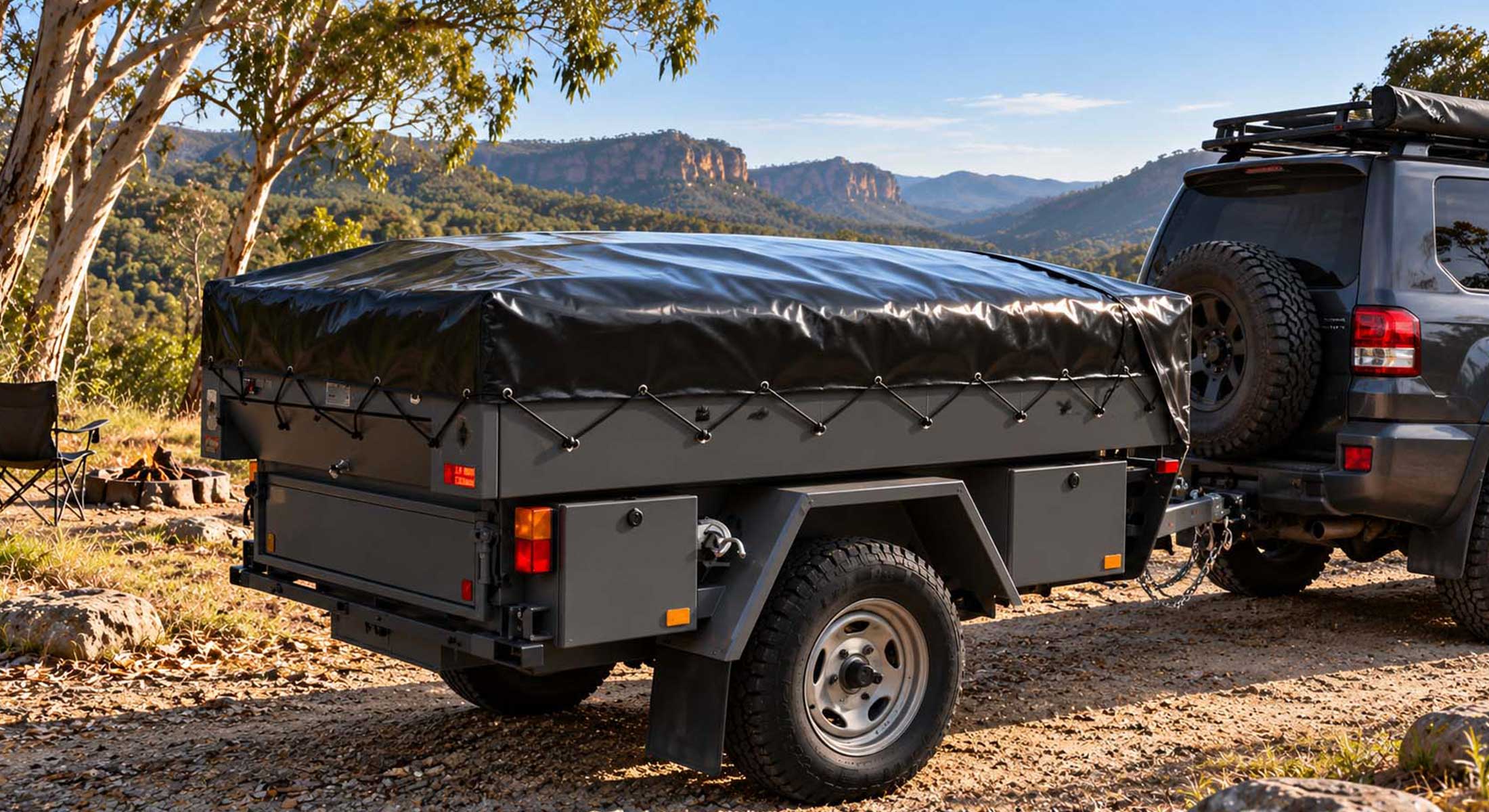
Today, the range of DIY builds is enormous. Some owners start with a second-hand trailer and add a removable camping setup, while others fabricate custom chassis, storage compartments, sleeping platforms and electrical systems. The result might be a simple weekend camper or a highly capable trailer designed for weeks of independent travel.
Why Build Your Own Camper Trailer?
One of the biggest attractions of a DIY camper trailer is the opportunity to build something that suits your needs rather than adapting your camping habits to a manufacturer’s design.
A family heading away for school holidays might prioritise sleeping space, a large awning and plenty of storage. Someone travelling alone through remote areas may prefer a compact, lightweight trailer with a basic kitchen and enough equipment to remain self-sufficient.
Budget is another consideration. Commercial off-road camper trailers can represent a significant investment, particularly at the premium end of the market. Building or modifying a trailer allows owners to spread expenditure over time, source components independently and complete some of the work themselves.
That doesn’t necessarily mean a DIY camper will always be cheaper. Materials, specialist components, tools, professional fabrication and the time involved can add up quickly. However, owners have greater control over where the money goes and which features are worth including.
There’s also the satisfaction of completing the project. Designing a storage compartment, installing a folding kitchen or creating a custom weatherproof cover can be rewarding in its own right. For many enthusiasts, improving the camper becomes an ongoing hobby rather than a one-off construction project.
The Evolution of DIY Camper Trailer Design
As camping equipment and technology have improved, so have the possibilities for home-built camper trailers.
Early projects often concentrated on the essentials: somewhere to sleep, somewhere to store gear and a way to keep everything reasonably dry. Modern builds can incorporate independent suspension, solar panels, lithium batteries, water tanks, slide-out kitchens, rooftop tents and sophisticated storage arrangements.
Access to information has changed the process just as much as the equipment itself. Online forums, YouTube channels and social media groups allow builders to share plans, discuss construction methods and learn from other people’s experiences.
A project that once required considerable trial and error can now begin with weeks of research into different layouts, materials and construction techniques. Builders can compare designs, identify potential problems and decide which parts of the project they can confidently complete themselves.
There has also been growing interest in modular construction. Rather than permanently converting a trailer into a camper, some owners build removable camping modules that allow the same trailer to be used for household jobs, transporting equipment or weekend adventures.
This flexibility is particularly appealing to people who don’t have the space or budget for a dedicated camper trailer.
The Materials That Make a DIY Camper Work
Although the structural components tend to receive much of the attention during a camper trailer build, the smaller details can make a considerable difference to how practical the finished setup is.
Weather protection is a good example. A well-designed cover can protect equipment stored in the trailer, while an awning or sheltered outdoor area can make camping far more comfortable during hot weather or passing showers.
This is where materials such as canvas, PVC and polyethylene tarpaulins become useful. Depending on the application, they can be used to create protective covers for trailer loads, equipment compartments, stored camping gear and other exposed areas.
For builders working with unusual dimensions, custom-made tarpaulins can be particularly practical. Rather than trying to adapt a standard cover to an awkward shape, a cover can be made to suit the equipment or area being protected.
Shade cloth is another versatile material. It can be incorporated into temporary shade screens, campsite privacy panels and other lightweight outdoor additions where airflow is desirable. It is important to remember that shade cloth is not a waterproof substitute for an awning, so the material needs to be matched to the intended purpose.
Smaller components such as rope, shock cord and webbing also have their place. Rope can be used for suitable tie-down and support applications, while shock cord is useful for maintaining tension on lightweight covers and securing loose fabric edges. Webbing can be incorporated into straps, handles and fabric attachments, provided the material and construction are appropriate for the load.
At Discount Tarps, we supply a range of tarpaulins, canvas, shade cloth, rope, shock cord and webbing that can be useful for these types of DIY projects. Whether you’re creating a simple protective cover or putting together a more involved camping setup, choosing suitable materials is an important part of getting a practical result.
Starting Small: Modifying an Existing Trailer
Building a camper trailer doesn’t have to involve fabricating an entirely new trailer from scratch. In fact, modifying an existing trailer can be a more manageable starting point, particularly for people with limited workshop space or experience.
A basic box trailer can provide a foundation for transporting camping equipment, with removable storage units, a tent arrangement or a lightweight sleeping platform added as required.
Some builders begin by improving storage and weather protection before moving on to more complicated additions. A fitted tarp, for example, may be sufficient to protect equipment during transport, while a removable shade screen can make an established campsite more comfortable.
Others focus on convenience, introducing drawer systems, accessible storage compartments or dedicated areas for cooking equipment. By making changes gradually, owners can use the trailer on camping trips and discover which improvements would genuinely make a difference.
This approach also helps avoid one of the common frustrations of DIY projects: spending considerable time and money on features that look impressive in the workshop but prove unnecessary in everyday use.
Getting the Safety and Legal Requirements Right
While the creative side of building a camper trailer is enjoyable, the structural and mechanical requirements deserve careful attention.
A camper trailer must be suitable for the loads it carries and comply with the applicable Australian vehicle standards and registration requirements. Important considerations include towing capacity, aggregate trailer mass, towball download, suspension, brakes, lighting and the way weight is distributed throughout the trailer.
These requirements become particularly important when adding heavy equipment such as water tanks, batteries, storage systems and spare wheels. Even relatively small additions can affect the overall weight and balance of a trailer.
Anyone building a trailer from scratch should investigate the applicable approval and registration requirements before starting construction. Modifying an existing trailer can also introduce compliance issues, particularly when changes affect its structure, weight rating or registered details.
Requirements vary according to trailer design, weight and the state or territory in which it is registered. Structural fabrication and specialised electrical or gas installations should be handled by appropriately qualified professionals where required.
It’s also worth distinguishing between materials used for general camping convenience and components designed to secure loads during travel. Ordinary shock cord, lightweight webbing and general-purpose rope should not be relied on as substitutes for appropriately rated load restraints.
A successful DIY camper trailer isn’t just about creating a practical camping setup. It also needs to be safe, roadworthy and suitable for the conditions in which it will be used.
Building a Camper That Can Evolve
One of the most appealing things about a DIY camper trailer is that it never really has to be finished. As owners gain experience and travel to different places, they often discover new ways to improve their setup.
A trailer originally built for occasional weekend trips might eventually receive additional storage, a larger awning or a more capable electrical system. Families may need to accommodate changing sleeping arrangements as children grow, while couples might simplify their setup once they start travelling on their own.
Even small changes can make a worthwhile difference. Replacing a poorly fitting cover, improving the way equipment is secured or adding a removable shade panel can make packing, travelling and setting up camp easier.
This ongoing process of refinement is part of what makes the hobby interesting. Rather than purchasing a finished product and accepting its limitations, owners can continue adapting their camper to suit their changing requirements.
More Than Just a Camping Trailer
For many Australians, building a camper trailer combines two popular interests: getting outdoors and making things themselves. The project might involve metal fabrication, woodworking, sewing, electrical work or simply finding clever ways to organise equipment in a limited space.
It’s also a hobby that can bring people together. Friends and family often contribute their skills, while online communities provide inspiration and practical advice. Completed trailers become conversation starters at campsites, where owners exchange ideas and compare the modifications they’ve made.
Of course, there’s something particularly satisfying about arriving at a campsite, setting everything up and knowing that much of the equipment around you is the result of your own work.
Whether it’s a basic box trailer conversion or an extensively customised off-road camper, the idea remains much the same: creating something that makes it easier to get out and explore Australia.
And sometimes, the next improvement starts with nothing more complicated than a piece of canvas, a length of rope and a good idea.
