


Spring Project Planner – How Tarps Come In Handy
Spring has a way of triggering the same instinct in most Australian households — the sudden urge to tackle every outdoor job that’s been sitting on the mental to-do list since last September. The fence needs a coat of paint. The deck could use a re-stain. There’s a load of mulch arriving Saturday morning. The patio furniture that’s been under a tarp since June needs a proper clean before it earns its keep again. It’s a genuinely busy season for anyone with a garden, a driveway and a weekend to spare.
What tends to get less thought than it deserves is what to actually cover during all of this activity — and just as importantly, what to cover it with. Get it wrong and you’re dealing with paint-splattered pavers, a soggy pile of mulch that’s twice as heavy to shift as it should be, or furniture that’s picked up overspray from a job three metres away. Get it right and the whole spring project list runs a lot more smoothly.
This is a practical rundown of the spring jobs most Australian households take on, and the right tarp for each one.
Soil, Mulch, Sand and Garden Material Deliveries
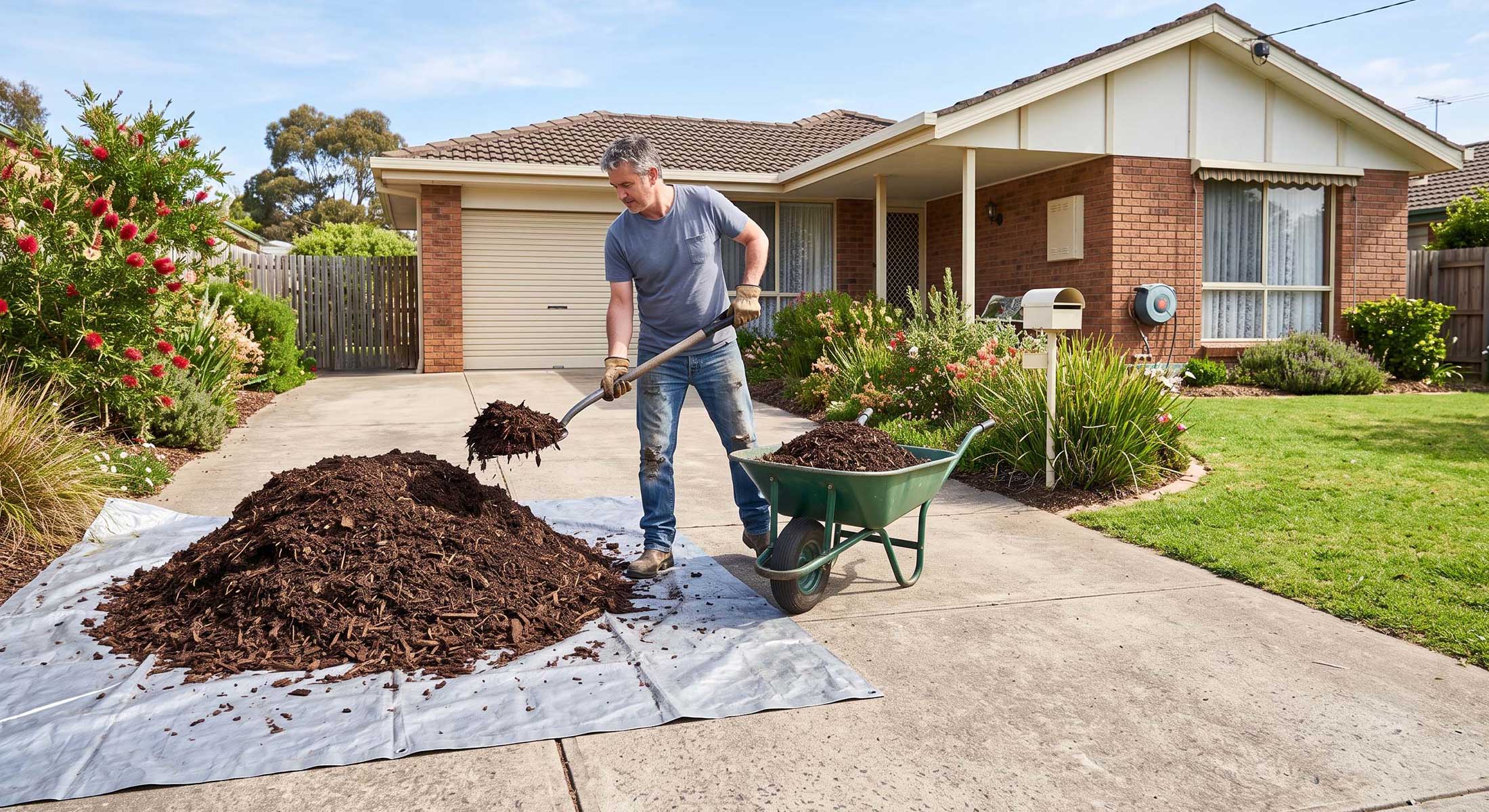
Nothing says “spring project underway” quite like a ute-load of soil or mulch dumped unceremoniously on the driveway or front lawn, waiting to be barrowed to wherever it’s actually needed. It’s an efficient way to get materials delivered, but it comes with two separate covering jobs that are easy to overlook.
The first is protecting the pile itself. Rain-soaked mulch gets significantly heavier to move, can start to compost and smell before you’ve even used it, and loses some of its effectiveness once it’s waterlogged. Soil that’s rained on becomes a sticky, awkward mess to shift by wheelbarrow. A heavy duty poly tarp thrown over the top and secured around the base keeps the pile in workable condition until you get through it — which, for anyone doing a project across multiple weekends, could be longer than you’d expect.
The second job is protecting what’s underneath. A pile of soil, mulch or sand left directly on a driveway or lawn stains concrete and pavers and can smother grass if it sits for more than a day or two. Laying a poly tarp down first, before the delivery even arrives, gives you a clean barrier that saves a lot of scrubbing and reseeding later. It also makes cleanup far easier — gather the corners of the tarp once you’ve cleared the pile and the leftover mess goes with it.
For this kind of job, our poly tarp range is the practical, cost-effective choice — tough enough to handle rough contact with garden material, fully waterproof, and easy to hose off and fold away once the pile’s gone.
Painting and Staining: Fences, Decks and Outdoor Furniture
Spring is prime painting and staining season, and for good reason — the weather’s finally cooperative enough to get a coat on and have it cure properly without rain interference. Fences get refreshed, decks get re-stained, outdoor furniture gets a new lease on life. All of it comes with the same fundamental challenge: keeping paint and stain where it’s meant to go.
A poly tarp laid down as a drop sheet is the standard solution, and it works well precisely because it’s cheap enough not to worry about, waterproof enough to wipe clean between coats, and large enough to cover paving, garden beds and anything else in the splash zone. For fence painting specifically, laying a tarp along the base of the run catches drips and overspray that would otherwise end up on the lawn or garden bed below.
Where people often come unstuck is in joining sections of drop sheet together or securing them so they don’t shift underfoot mid-job. This is exactly where our heavy duty cloth tape earns its keep — it joins tarp edges cleanly so you’re not stepping into a gap between sheets, and it tears by hand so you’re not stopping mid-job to hunt down scissors. It’s also useful for masking off areas you don’t want painted, taping tarps to fence posts to stop them blowing around, and generally keeping a painting job tidy rather than chaotic.
For staining or repainting outdoor furniture, moving pieces onto a poly tarp before you start means overspray and drips land on something you can fold up and shake out, rather than soaking into lawn or decking. Once a fresh coat is on and drying, a breathable canvas cover — rather than a sealed plastic one — is worth considering if the piece needs protection overnight, since it allows the fresh finish to cure properly without trapping moisture against a surface that’s still off-gassing solvents.
The Patio and Outdoor Living Refresh
Spring is when most outdoor living areas come back to life after a quiet winter, and that usually means a proper clean-up before the space earns its keep for the warmer months. Pressure washing paving, resealing a patio surface, cleaning and repositioning furniture — all straightforward jobs, but ones that benefit from a bit of tarp planning.
Pressure washing in particular throws a surprising amount of dirty water and grime around, and covering nearby garden beds, outdoor furniture or anything you don’t want splattered with a poly tarp for the duration of the job saves a lot of extra cleanup afterwards. If you’re resealing a paved or timber surface, the same applies — protect anything adjacent that shouldn’t cop overspray or drips.
If your patio, verandah or alfresco was enclosed with clear PVC panels through winter to keep the wind and rain out, spring is also the natural moment to reconsider that setup. Some households take the panels down entirely once the weather turns; others keep at least one side in place for wind protection through spring’s more changeable days. Either way, it’s worth giving the panels a clean before storing them and checking they’re in good shape for next winter. If your winter setup didn’t quite fit the space properly, this is also a good moment to think about a made-to-order PVC panel sized properly for next season rather than making do again.
Garden Bed Preparation and New Turf
Spring garden bed preparation often starts with clearing out what’s left of winter growth and getting beds ready for new planting — and a poly tarp is a genuinely useful tool for both stages of that process. Laid over a bed for a couple of weeks before planting, a dark poly tarp helps suppress weeds and can assist in warming the soil ahead of planting, a technique commonly known as soil solarising. It’s a low-effort way to get a head start on bed preparation without chemical weed control.
For anyone laying new turf this spring, freshly laid turf is vulnerable in its first few weeks — to birds pulling at loose edges before roots establish, and to harsh late-spring sun stressing the grass before it’s properly settled in. A mesh or shade cloth cover over new turf gives it some protection during that establishment window while still allowing light, air and water through — which a solid cover wouldn’t.
Renovation and Building Material Deliveries
Spring building and renovation projects — new decking, a paved area, a garden retaining wall — often mean building materials arriving well before the job actually starts. Decking timber, pavers, besser blocks and bagged cement or sand left exposed to the weather can warp, degrade or set prematurely if they’re not covered properly while they wait.
For shorter-term protection of a modest quantity of materials, a heavy duty poly tarp does the job well — waterproof, tough enough to handle contact with rough or heavy materials, and easy to reposition as you work through the pile. For larger deliveries or longer project timelines — particularly for anyone doing a significant renovation with a genuinely large stockpile of materials sitting for weeks rather than days — it’s worth looking at our stockpile cover range, built for exactly this kind of larger-scale, longer-duration coverage.
Camping and Caravan Gear Coming Out of Storage
For anyone who tucked the camping gear away under canvas for winter, spring is the moment it comes back out ahead of the warmer months’ adventures. Before it heads back into the car or caravan, it’s worth giving stored gear a proper check — inspecting canvas tarps and covers for any mildew or damage that crept in over winter, giving everything a clean, and making sure it’s genuinely ready for the first trip of the season rather than discovering a problem halfway up the coast.
If your canvas cover picked up any spotting or staleness in storage, now’s the time to address it properly before it goes back into regular use — a quick clean and a full dry in the sun and breeze, well before the first camping trip, means it’s in good shape when you actually need it.
A Simple Rule for the Season
Most spring projects come down to the same underlying question: what needs protecting, from what, and for how long? A quick pile of soil for the weekend needs something different to a stockpile of renovation materials sitting for a month. A painting job that generates splatter and mess for an afternoon needs something different to furniture curing overnight. Matching the material and the duration to the actual job — rather than grabbing whatever tarp happens to be nearest in the shed — is what separates a spring project that runs smoothly from one that creates twice the cleanup it needed to.
Whatever’s on your spring list this year, having the right cover ready before the job starts beats improvising halfway through every time.
