



Smart Mulch & Soil Management with Tarps
Mulch and soil deliveries are great for the garden — until the load hits the driveway and fine material tracks everywhere. A simple tarp plan turns a messy job into a clean, fast one. The goal is to stage the delivery on a poly tarp, move it where you want it without spreading grit, and keep rain-wash out of your paths and drains.
Stage the load on a poly tarp
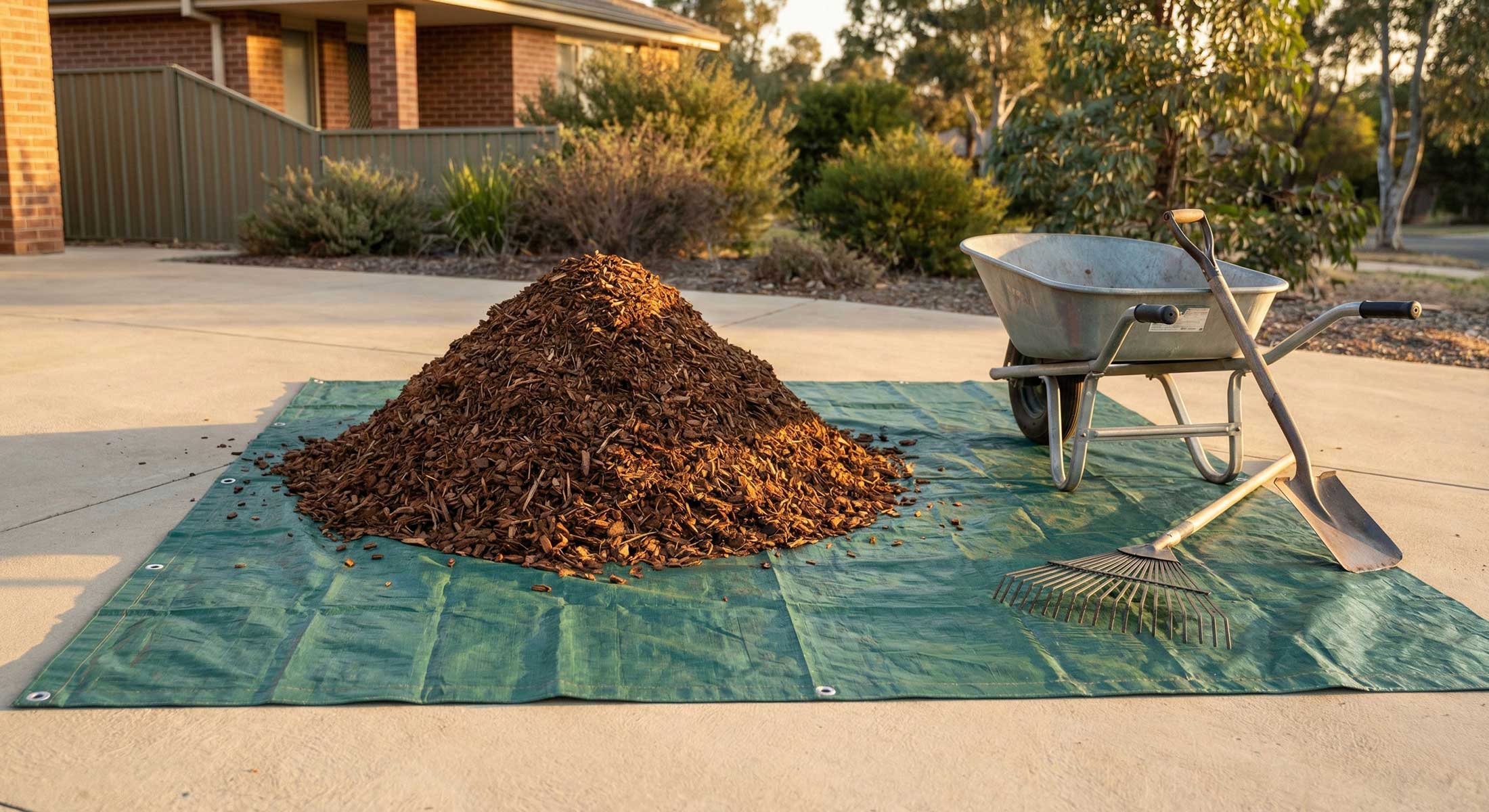
Poly tarps are light, tough for their weight and water-resistant, which makes them ideal for landing mulch or soil. Roll one out on a swept surface before the truck arrives and you’ve instantly created a clean “landing pad”. Ask the driver to tip so the pile sits centrally on the sheet with enough overhang to fold up if needed. If you’re on a slight slope, run the tarp across the fall so the edges form a small lip that helps keep fines from escaping.
Keep it dry and contained
Rain is the enemy of tidy transfers. If the forecast looks shaky, fold a second poly tarp over the pile, weigh the edges, and create a gentle fall so water runs away from the stack rather than into it. This keeps mulch springy and stops soil turning to sludge. A clear edge around the pad also helps keep foot traffic clean when you’re moving barrows.
Tidy transfers without the trail
Most spillage happens between the pile and the garden bed. Treat the tarp like a temporary funnel: pull one corner towards your wheelbarrow path and shape a shallow “chute” with the sheet so loose material falls back onto the tarp, not the driveway. When loading, face the barrow uphill (or against a chock) so it doesn’t creep, then shovel from the same side each time. If you’re raking, keep the rake tines on the tarp rather than the concrete — it protects both surfaces and gathers fines efficiently.
Manage runoff the smart way
Even on a clear day, light watering and foot traffic can move fines. Use the tarp’s edge as a low bund to keep material contained while you work. If rain arrives mid-job, cover the pile quickly and direct any water off the tarp and onto a garden bed, not into stormwater. A small timber or hose “speed bump” under the tarp edge can help divert run-off into lawn or soil where it can soak in rather than carry silt down the drive.
Size, weight and re-use
For most suburban deliveries, a medium to heavy-duty poly tarp sized a little larger than the footprint of the pile gives you room to fold edges and shape the chute. Poly is easy to lift and store, so once the job is done, sweep the remaining fines back towards the centre, fold the sheet in on itself to trap dust, shake it out on the garden, then stand it to dry before rolling away. Treated well, a good poly tarp will handle multiple delivery days a year without complaint.
Where to start
If you’re ordering mulch in summer, lean towards a lighter poly that’s easy to handle and quick to deploy. For heavier soils or crusher dust, a heavier-duty sheet resists scuffing and dragging better. If your driveway is exposed and you want a cover that can sit for a few wet days, pairing poly with a PVC top cover is a solid upgrade for waterproofing and longevity — but for most homeowners, a quality poly tarp does the core job brilliantly.
At Discount Tarpaulins we stock a wide range of poly tarps in practical sizes for staging mulch and soil, plus accessories to keep everything anchored and tidy. If you’re unsure which size or grade to choose, tell us your driveway dimensions and the load you’re expecting — we’ll recommend the right setup.
