



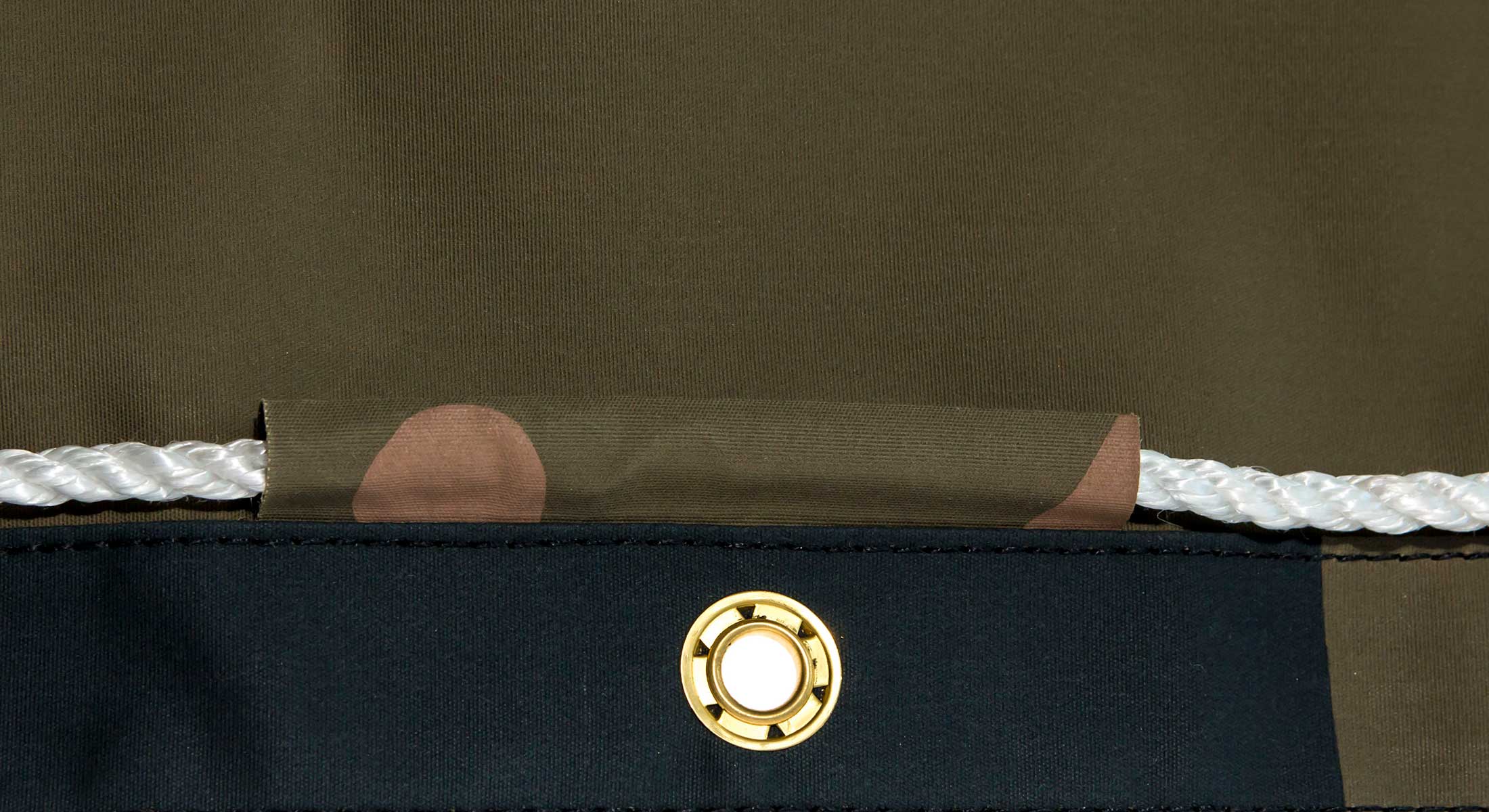
Securing Your Tarp: Comparing Grommets, Eyelets, and Fasteners
When it comes to tarpaulins, the fittings you choose play a vital role in ensuring that your tarp stays securely in place. In this post, we’ll break down the differences between grommets, eyelets, and fasteners, and provide some practical examples of when and how to use each.
What Are Grommets and Eyelets?
Grommets and eyelets are small metal rings embedded along the edge of a tarp. Although the terms are often used interchangeably, there are subtle differences.
Grommets
Typically made of metal or reinforced plastic, grommets are designed to withstand heavy loads and are often larger. They are ideal when you need extra strength, such as for industrial applications or when securing heavy loads on trailers.
Eyelets
These are generally smaller and more lightweight than grommets. Eyelets work well for lighter-duty applications where a neat, low-profile finish is desired. They are commonly found on tarps used for recreational activities or temporary outdoor covers.
Usage Example
For covering a trailer load in harsh weather, a tarp with robust grommets is recommended to ensure that the cover remains securely fastened even in windy conditions. Conversely, if you’re setting up a makeshift shelter for a weekend camping trip, a tarp with eyelets may suffice.
Understanding Fasteners
Fasteners refer to the methods and hardware used to attach and secure your tarp. They include:
Ropes and Bungees
These are the most common types of fasteners used with tarpaulins. They loop through grommets or eyelets to tie down the tarp securely. Ropes offer flexibility, while bungees provide a bit of stretch, which can be useful for uneven surfaces.
Hooks and Clips
These fittings can offer a quicker, more convenient way to secure a tarp, especially in situations where frequent adjustments are necessary. They are often used in sporting events, outdoor markets, or temporary shade structures.
Straps and Buckles
Often found on custom or heavy-duty tarps, straps with buckles can provide a firm and adjustable hold. They are particularly useful for securing tarps over irregularly shaped objects where a simple tie-down may not be sufficient.
Usage Example
If you need to secure a tarp for a construction site, using ropes or bungees through grommets can provide a strong, reliable hold. For temporary event setups where speed is important, hooks and clips might be the better choice.
Choosing the Right Fitting for Your Project
When selecting tarp fittings, consider the following factors:
Load and Weight
For heavier applications or in high-wind areas, opt for tarps with larger, more robust grommets paired with durable fasteners such as heavy-duty ropes or straps.
Application Environment
In environments where the tarp will be frequently adjusted or removed, fittings that allow for easy and quick fastening, like clips or buckles, might be more convenient.
Aesthetic and Practical Considerations
For projects where appearance matters, such as at outdoor events or in recreational settings, eyelets might offer a cleaner look compared to larger grommets.
Budget
High-quality fittings can add to the cost of your tarp. Evaluate your project needs against your budget to decide whether investing in more robust fittings is necessary.
Understanding the differences between grommets, eyelets, and fasteners is essential for selecting the right tarpaulin for your needs. Each type has its own benefits, whether you’re looking for heavy-duty performance, ease of use, or a neat finish for a temporary cover.
At Discount Tarpaulins, we’re dedicated to providing a range of products that cater to every requirement. If you have any questions or need advice on which fittings will work best for your specific application, feel free to reach out to our team.
