


Poly, PVC, Canvas or Mesh by the Metre
Which Raw Material Suits Your DIY Project?
There’s a particular kind of DIY project that a finished, off-the-shelf tarp just can’t solve. Maybe you’re building a set of annexe walls for a caravan with a shape that doesn’t match anything in a catalogue. Maybe you’re making your own market stall side panels, sewing a custom boat cover, patching a worn swag, or building something entirely of your own design that starts with a roll of raw material rather than a finished product. For all of these projects, the question isn’t which tarp to buy — it’s which material to start with.
Buying material by the metre opens up a completely different kind of project to buying a finished tarp. You’re not choosing a size and a colour from a fixed list, you’re choosing raw fabric that you’ll cut, sew, glue or fasten into whatever it is you’re actually trying to build. And that means the choice of material matters even more than it does when buying something ready-made, because you’re the one who has to work with it, and the finished result depends entirely on picking something suited to both the job and your own skills and tools.
This guide walks through the four main material types we sell by the metre — poly, PVC, canvas and mesh — and how to think about which one suits the kind of project you’re planning.
Why Buying by the Metre Is a Different Decision to Buying a Tarp
Before getting into the specific materials, it’s worth understanding what’s actually different about this category compared to buying a finished tarp, because it changes how you should think about the decision.
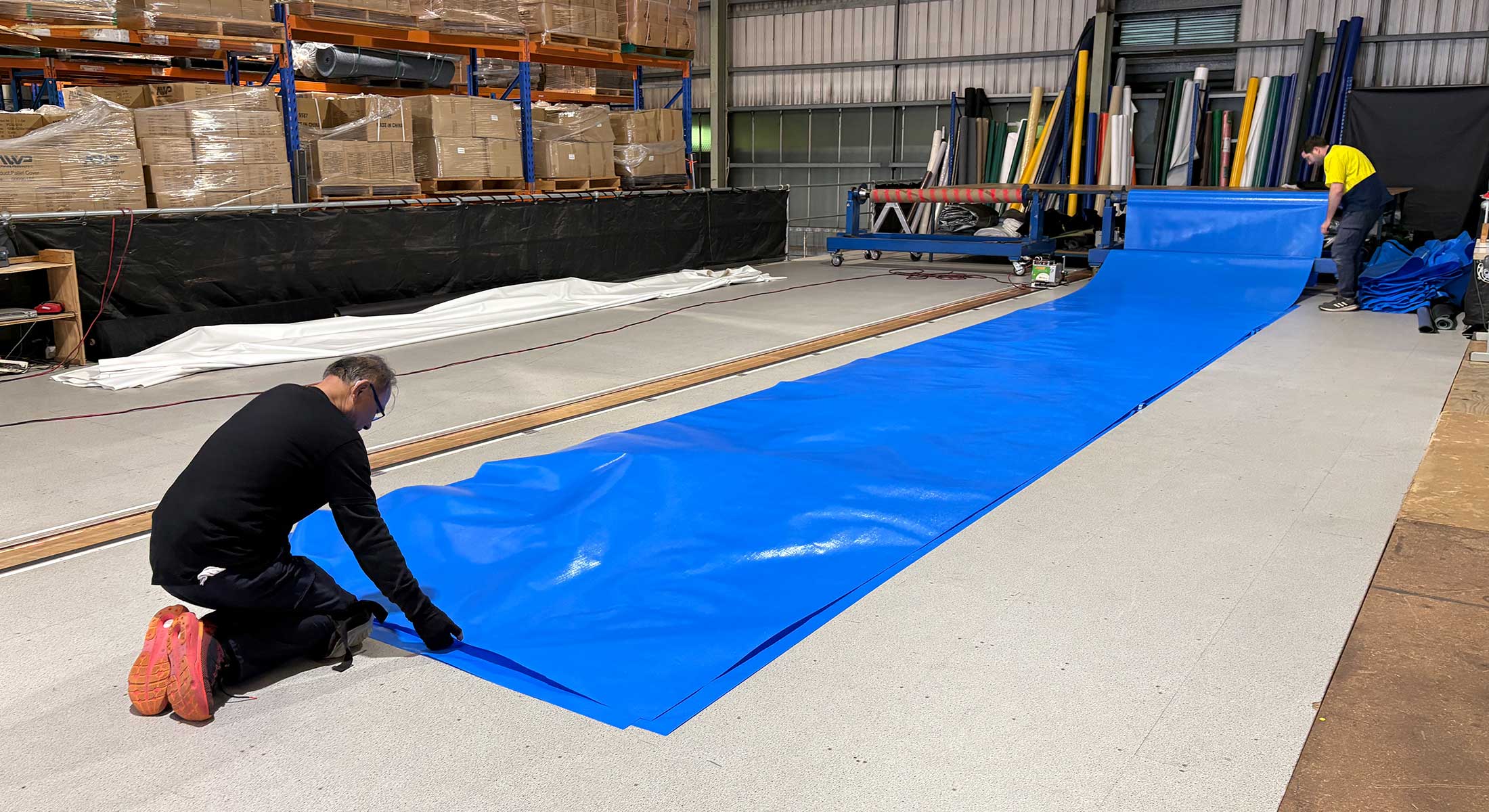
A finished tarp arrives ready to use — hemmed edges, eyelets in place, sized and shaped for you. Material by the metre arrives as raw fabric off the roll, with none of that finishing done. That’s exactly the point for a DIY project — you’re not paying for finishing work you don’t need, because you’re going to cut, shape and finish the material yourself to suit your specific project. But it does mean the material needs to actually be workable for what you’re planning to do with it, in terms of both the fabric itself and the tools and skills you have available.
Sewing heavier materials, in particular, requires a machine genuinely capable of handling the thickness and stiffness involved — a standard domestic sewing machine will struggle with heavier PVC or canvas, and a project that involves substantial stitching through multiple layers of heavy fabric is a job better suited to an industrial or heavy-duty machine. Lighter materials are far more forgiving and open up projects to anyone with a standard home machine. Matching the material to your actual equipment and skill level is just as important as matching it to the finished use.
Poly by the Metre: Affordable, Waterproof, Straightforward
Polyethylene is the most affordable and widely used material in this range, and for good reason. It’s fully waterproof, relatively easy to work with, and forgiving of a wide range of DIY applications where cost-effectiveness and basic weather protection matter more than a refined, tailored finish.
For DIY projects, poly by the metre suits jobs like building your own liner for a pond, garden bed or raised planter, creating a simple ground sheet or under-tarp layer for a bigger project, patching or extending an existing poly tarp that’s otherwise still in good condition, or making basic covers and liners where waterproofing is the primary requirement and aesthetics are secondary.
Where poly starts to fall short is anywhere you need a refined, tailored finish or genuine durability under repeated stress. It’s not the material of choice for something like a fitted boat cover or an annexe wall that needs to look neat and hold its shape over years of use — for those projects, PVC or canvas are generally the better starting point. But for straightforward, functional, budget-conscious projects, poly by the metre does the job without unnecessary cost.
PVC by the Metre: The Workhorse for Structured Projects
PVC is where a lot of the more ambitious DIY sewing and building projects tend to land, and it’s easy to see why once you understand what it offers. It’s tough, fully waterproof, holds its shape well, and is available in a genuine range of weights and finishes to suit different levels of demand.
For annexe walls, café blinds, market stall side panels, shop awnings and similar structured DIY builds, PVC is generally the material of choice. It’s stiff enough to hold a reasonably flat, taut shape once fitted, tough enough to handle being rolled up, unrolled, and handled repeatedly without quickly wearing out, and fully waterproof for genuine outdoor use. Lighter PVC weights are more manageable for a first-time sewing project, while heavier rip-stop options suit anything that’s going to see serious, repeated outdoor use or higher stress at attachment points.
PVC is also a strong choice for upholstery-style applications — outdoor cushion covers, boat seating, bench seat covers — where a wipeable, waterproof surface matters and a bit of stiffness in the material actually helps it hold its shape and sit neatly once fitted.
The trade-off with PVC is that it’s less forgiving to sew than lighter fabrics, particularly at the heavier end of the range. A project involving multiple layers of heavier PVC, especially around seams and corners, needs a machine capable of handling that bulk, and it’s worth being realistic about your equipment before committing to a heavier weight than you can comfortably work with.
Canvas by the Metre: For Gear, Repairs and Traditional Craft
Canvas occupies a slightly different niche to poly and PVC, and it tends to suit a particular kind of project — one where breathability, natural texture, and a traditional, hard-wearing character matter as much as waterproofing.
For making your own tool rolls, gear bags, swags or similar hardwearing kit, canvas is a genuinely excellent starting material. It’s tough, handles abrasion well, and has the kind of solid, dependable feel that synthetic materials struggle to replicate. It’s also the natural choice for patching or extending existing canvas gear — a worn corner on a swag, a torn tool roll, a canvas cover that’s otherwise still serviceable but needs a section replaced — since matching the new material to the existing fabric gives a far better result than patching canvas gear with a synthetic alternative.
Canvas also suits upholstery-adjacent projects like market stall covers, directors’ chair seats and backs, and similar applications where a natural, breathable fabric with real durability is preferable to a fully sealed synthetic surface.
The trade-off with canvas is that it’s heavier and generally requires more consideration in construction than lighter synthetics — thicker seams, more robust stitching, and generally a bit more physical effort to work with. For projects where that traditional, hard-wearing character is exactly what you’re after, it’s well worth the extra effort. For projects where light weight and minimal fuss matter more, one of the synthetic options will usually serve you better.
Mesh by the Metre: Airflow Without Sacrificing Containment
Mesh is the material to reach for whenever a project needs to let air and light through while still providing some level of physical screening, containment or protection — and it opens up a category of DIY project that none of the solid materials can really address.
Building your own shade screen, windbreak or garden enclosure is a natural fit for mesh by the metre, particularly where a finished mesh tarp doesn’t come in quite the right size or shape for the space you’re working with. Mesh is also well suited to DIY debris screening and site containment applications, where you need to stop material escaping without creating a fully sealed barrier that catches wind or traps moisture behind it.
For garden-specific projects — protective netting over young plants, produce bags, simple enclosures to keep birds or pests off a particular bed or tree — mesh by the metre gives you the flexibility to build something sized and shaped exactly for the space, rather than working around the dimensions of a pre-made product.
Mesh is generally one of the more forgiving materials to sew, since it’s lighter and less bulky than PVC or canvas, which makes it a reasonable starting point for anyone newer to working with heavier fabrics who still needs a functional, durable result.
Thinking Through Your Specific Project
Rather than picking a material first and working out what to build with it, it’s worth starting from the actual project and working backward to the right material.
If you’re building something that needs to be completely waterproof and hold a defined, taut shape — an annexe wall, a shop awning, a boat cover, a market stall panel — PVC is very likely your starting point, with the weight chosen based on how much handling and stress the finished item will face.
If you’re making or repairing hardwearing gear that benefits from a natural, breathable, traditional character — tool rolls, bags, swags, canvas patches — canvas is the material that suits both the practical requirements and the aesthetic most people are after for this kind of project.
If cost and simplicity matter more than a refined finish — liners, ground sheets, basic functional covers — poly by the metre gets the job done without unnecessary expense.
And if the project needs airflow as much as it needs coverage — shade structures, screening, garden protection — mesh is the material built for exactly that balance.
For any project that involves a lot of stitching through thicker material, or where you’re not confident about how a particular weight will handle on your equipment, it’s genuinely worth reaching out before you commit to a large quantity. Getting a feel for the material and matching it properly to both the project and your equipment saves a lot of frustration partway through a build.
Starting Your Project With the Right Foundation
The right raw material is the foundation everything else in a DIY sewing or building project is built on. Get it right, and the rest of the project — the cutting, the stitching, the finishing — goes far more smoothly than fighting against a material that was never quite suited to what you were trying to build.
Browse the full range of poly, PVC, canvas and mesh by the metre at Discount Tarpaulins and find the right starting material for your next project.
