


Keep the View, Lose the Wind Chill
Enclosing Your Alfresco or Patio with Clear PVC This Winter.
There’s a particular kind of sadness that settles over a beautiful alfresco or patio area in the middle of winter. The outdoor dining table that hosted every weekend through spring and summer sits empty. The comfortable chairs face a grey sky and a cold wind. The whole space — carefully chosen, probably quite expensive — goes unused for three or four months while everyone retreats inside and presses their faces against the glass wishing it was warmer.
The thing is, it doesn’t have to be that way. The difference between an outdoor space that gets used year-round and one that hibernates through winter usually comes down to one thing: whether it’s sheltered from wind and rain. Get that right and the same space that felt uninhabitable in July becomes somewhere genuinely comfortable — warm enough with the right outdoor heating, dry enough to eat and drink in, and connected to the garden in a way that sitting inside the house simply isn’t.
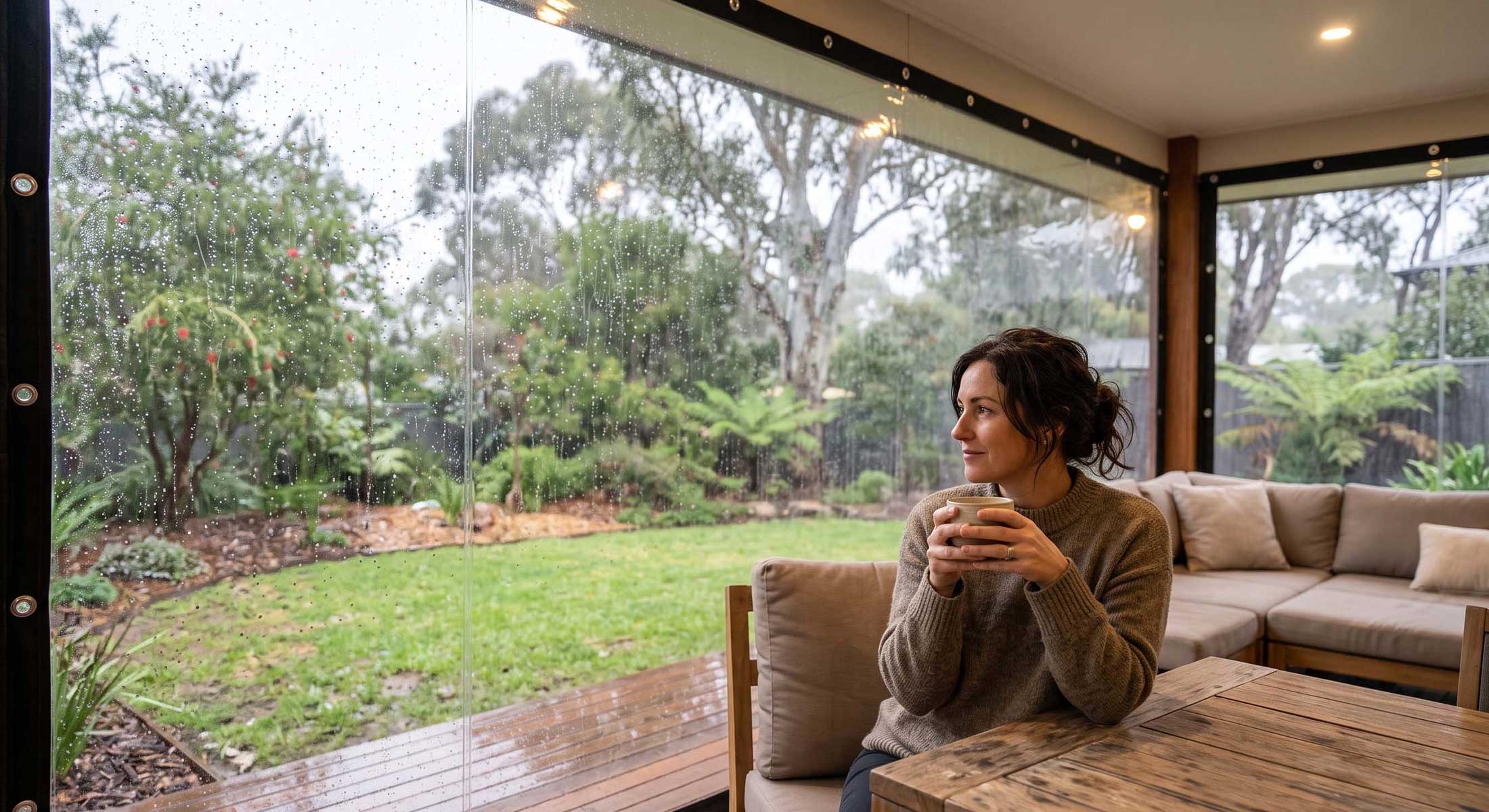
Clear PVC panels are one of the most elegant solutions to this problem, and they’re increasingly popular for exactly that reason. They block wind and rain with the same effectiveness as a solid panel, but they do it without closing off the view — which means the whole point of having an outdoor alfresco or patio in the first place is preserved, even in the middle of winter. You can still see the garden. Natural light still floods the space. It still feels like you’re outside, just without the cold and the wet.
Why Winter Outdoor Living Comes Down to Wind and Rain
It’s worth being specific about what actually makes an outdoor space uncomfortable in winter, because understanding the problem makes it easier to see why clear PVC solves it so effectively.
In most parts of Australia, winter temperatures are genuinely manageable — particularly in the middle of the day or with the assistance of a decent outdoor heater or fire pit. What makes outdoor spaces feel cold and uninhabitable isn’t purely the temperature — it’s the combination of wind chill and wet weather. Wind dramatically accelerates heat loss from the body, and a 15-degree day with a brisk southerly feels nothing like a 15-degree day that’s still and calm. Rain is more straightforward — it simply makes outdoor living impossible without shelter.
Block the wind and keep the rain out, and the temperature problem becomes very manageable. An enclosed alfresco with a patio heater in the corner on a winter evening is genuinely comfortable — warm, sheltered, and with that particular pleasure of being close to the outdoors while protected from the worst of it. The same space without enclosure is miserable in the same conditions.
This is the fundamental case for enclosing an alfresco or patio for winter: you’re not trying to recreate an indoor environment outside, you’re simply removing the two elements — wind and rain — that make outdoor living unpleasant in winter while preserving everything else about the space that makes it worth being in.
Why Clear PVC Rather Than Solid Panels
The moment you start thinking about enclosing an outdoor space, the instinct is often to reach for solid materials — shade cloth, canvas side panels, solid PVC tarps, timber lattice, or any of the other options that create a clear physical barrier. And solid panels absolutely work for wind and rain protection. But they come with a trade-off that matters a lot for alfresco and patio spaces specifically: they close off the view and significantly reduce natural light.
An alfresco or patio exists — in most cases — because someone wanted to be outside, in the garden, connected to the outdoor environment. That’s the whole point. Enclosing it with solid panels solves the weather problem but creates a different one: the space stops feeling like an outdoor area and starts feeling like a slightly draughty room with unusual walls. The garden view disappears. The natural light is reduced. The sense of being outdoors — which was the reason for the space — is compromised.
Clear PVC preserves all of that. Our CrocSkin Super Clear PVC Tarp at 0.45mm thickness is genuinely transparent — the clarity is close to glass, allowing an essentially unobstructed view through the panel while still providing complete protection from wind and rain. Natural light passes through freely. The garden is still visible. The sense of being in an outdoor space is maintained. You’re sitting inside a weatherproof enclosure that still feels, looks and behaves like an outdoor area.
This distinction matters practically as well as aesthetically. Natural light in an enclosed alfresco means plants nearby don’t suffer. It means the space feels bright and pleasant rather than dim and cave-like. And it means the view you designed the outdoor area around — whether that’s a garden, a pool, a bush outlook or simply an open sky — is something you can enjoy from the comfort of a sheltered, wind-free space on a cold winter evening.
The Spaces That Benefit Most
Clear PVC enclosure works particularly well for certain types of outdoor spaces, and it’s worth thinking about which category your alfresco or patio falls into.
Roofed pergolas and alfresco areas are the most natural fit. A roofed structure already handles rain from above, and adding clear PVC panels to the open sides completes the enclosure by blocking wind and rain from the sides. The result is a space that’s genuinely weatherproof on all sides without losing any of the light and openness that makes a roofed alfresco enjoyable. For many homes, this is the single change that converts a three-season alfresco into a four-season one.
Verandahs — particularly on older Australian homes where a verandah wraps around part of the house — are excellent candidates for clear PVC enclosure. Verandahs are often exposed to the prevailing weather direction, and a southerly or westerly wind in winter makes them completely unusable despite being covered. Clear PVC panels on the weather-facing side transform a cold, windswept verandah into a sheltered sitting area that can be used year-round. The classic look of the verandah — open to the garden, connected to the outdoor environment — is preserved through the transparency of the panels.
Elevated decks and entertainng areas where the view is a significant part of the appeal benefit enormously from clear PVC over solid alternatives. An elevated deck overlooking a garden or valley view loses much of its appeal if solid panels are added to shelter it — the view disappears behind the wall. Clear PVC solves the weather problem without compromising the reason the space was built.
Outdoor dining areas attached to restaurants, cafes and similar hospitality venues are where clear PVC enclosure has perhaps the longest history, and the domestic application follows the same logic. Customers want to sit outdoors. In winter, they want to be warm and dry while doing so. Clear panels deliver both without making the outdoor dining area feel like an indoor one.
Pool surrounds and entertaining areas adjacent to pools are a particularly good application because the combination of water reflection and natural light through clear PVC creates a genuinely beautiful enclosed space. The pool is still visible and the light still bounces. The wind chill that makes a poolside evening miserable in winter is gone.
What Clear PVC Does That Glass Doesn’t
The natural comparison for clear PVC enclosure panels is glass — and it’s worth being direct about where clear PVC sits relative to glazed enclosure systems.
Permanent glazed systems — bi-fold or sliding glass panels, fixed glazed screens — are the premium end of the outdoor enclosure market. They’re beautiful, durable, and provide excellent weatherproofing. They’re also expensive, require professional installation, involve building permits in many cases, and are permanent structural changes to the property. For many homeowners, the cost and commitment of a glazed enclosure system is simply not proportionate to the use they’d get from it, particularly for a rental property or a home they may not stay in long-term.
Clear PVC tarps sit in a completely different category — accessible, affordable, and non-permanent. They can be put up for winter and taken down for summer. They can be tried in one configuration and adjusted if it doesn’t work perfectly. They can be sized to specific dimensions and deployed without professional installation or council approvals. And the cost is a small fraction of a permanent glazed system.
The visual result of a well-fitted clear PVC enclosure is genuinely impressive — particularly to a casual observer who isn’t specifically looking for the material. The transparency of our CrocSkin Super Clear PVC Tarp at 0.45mm is close enough to glass that from a garden view looking in, a properly installed clear PVC panel reads as glazing rather than tarp material.
For the right situation and the right homeowner, clear PVC is simply the pragmatic, cost-effective solution that delivers most of the benefit of a permanent glazed system at a fraction of the cost and commitment.
Comfort, Heating and the Winter Alfresco Experience
Enclosing an alfresco or patio with clear PVC changes the thermal dynamics of the space in ways that go beyond simply blocking the wind. An enclosed space retains heat significantly better than an open one — which means outdoor heating becomes dramatically more effective.
A patio heater or outdoor fireplace that barely takes the edge off the cold in an open alfresco can make an enclosed space genuinely warm. The heat stays in the space rather than dissipating into the open air. In direct sun, a clear PVC enclosure also benefits from a mild greenhouse effect during the day — the sun’s energy enters through the transparent panels and the air inside warms up noticeably, creating a pleasant, naturally warm space on a clear winter day even without supplementary heating.
This thermal behaviour is part of what makes a clear PVC enclosed alfresco such a compelling winter space. It’s not just comfortable in the sense of being protected from the elements — it can be genuinely warm and pleasant in a way that invites extended use rather than a quick cup of tea before retreating inside.
The combination of natural light, a garden view, wind and rain protection, and retained heat creates an outdoor living experience in winter that’s genuinely difficult to replicate in any other way. It’s the closest thing to actually being outside without the cold — which is exactly the experience most people are looking for when they invest in an alfresco or patio space in the first place.
Sizing and Planning Your Clear PVC Enclosure
Getting the most out of a clear PVC enclosure comes down to covering the right openings with panels that are properly sized for the space. This is where taking the time to measure carefully and think through which sides of the space need panels pays dividends.
Most alfresco and patio spaces don’t need to be fully enclosed on all sides to become comfortable winter spaces. Identifying the weather-facing sides — typically the south and west in most parts of Australia — and prioritising those for panel coverage often delivers most of the benefit without fully enclosing the space. Leaving one side more open maintains ventilation and the sense of connection to the outdoors that makes an alfresco feel like an outdoor space rather than an enclosed room.
The Super Clear PVC Tarp is available in a range of standard sizes, which suits straightforward rectangular openings well. For spaces with non-standard dimensions — and most real-world alfresco and patio spaces have at least one bay that doesn’t align with a standard size — our Made to Order service produces panels to exact specifications, ensuring a precise fit that performs better and looks more intentional than a standard size that’s close but not quite right.
A panel that fits the opening precisely sits flat, maintains even tension, and provides consistent weatherproofing across its full surface. A panel that’s too large bunches at the edges and creates pockets that catch wind. A panel that’s too small leaves gaps. For a clear PVC enclosure where the visual quality of the installation is part of the point, getting the sizing right matters more than for a utility cover application.
This Winter Is the Right Time
The timing of a clear PVC alfresco enclosure matters in a way that other home improvements don’t. Unlike a kitchen renovation or a garden replanting that can wait for a convenient moment, an outdoor enclosure delivers its value during winter — and winter is already here.
Every weekend between now and September that’s lost to a cold, exposed alfresco is time and enjoyment that doesn’t come back. The outdoor dinners that don’t happen, the Sunday morning coffees that retreat back to the kitchen, the space that goes unused while winter passes by. Getting a clear PVC enclosure sorted now means this winter is reclaimed rather than written off — and every winter after it.
The investment is modest. The result is an outdoor space that works for twelve months of the year rather than eight or nine. And the experience of sitting in a warm, sheltered, light-filled alfresco watching rain run down clear panels while the garden stays green and visible behind them is one of those genuinely satisfying home improvements that you wonder why you didn’t do sooner.
