


GSM, Weave and Proofing: How to Read a Canvas Tarp Spec Sheet
If canvas tarps all look the same to you, you’re not alone. Those spec sheets with GSM, blends, ripstop and eyelet types can feel like a foreign language. This guide translates the jargon into plain English so you can choose a tarp that actually suits how you’ll use it at home, on the road or on site.
What GSM really means
GSM stands for grams per square metre. It’s simply the weight of the fabric, which is a handy shorthand for thickness, feel and durability. A higher GSM canvas is heavier in the hand, more robust against chafe and wind, and holds tension well over time. A lower GSM canvas is easier to lift and fold, and makes sense for smaller covers and casual use. If you want a quiet, taut cover for a ute or trailer, a mid-to-higher GSM is your friend. If you want a camping groundsheet or a light cover you’ll move often, a lighter GSM keeps things practical.
Cotton vs poly-cotton blends
Traditional canvas is cotton. It breathes beautifully, drapes nicely and helps reduce the sweaty condensation you get under non-breathable covers. Poly-cotton blends weave polyester fibres into the cotton for added strength, better UV stability and faster dry times. Pure cotton feels classic and quiet in the wind. A good poly-cotton blend is tougher for day-in, day-out use and tends to shrink less across its lifetime. If you want a long-lived, hard-working cover you won’t baby, a blend is a smart pick. If you love the natural feel and don’t mind a little extra care, cotton is lovely to live with.
Ripstop and why it matters
Ripstop describes a reinforcing pattern woven into the fabric, often a subtle grid that looks like tiny squares. If a nail or branch catches the canvas, the tear meets those reinforced yarns and tends to stop short rather than running away. On a tarp that sees wind, tie-downs and the odd scrape, ripstop is cheap insurance. You’ll barely notice it visually, but you’ll notice when a nick stays a nick instead of becoming a problem.
Proofing: water off, breathability on
Canvas doesn’t try to be a plastic sheet. A quality proofing treatment makes water bead and run off while letting moisture vapour escape from underneath. That balance is the reason canvas is great over timber, furniture, gear and camping setups that shouldn’t be sealed in. Over time, grit and sun will wear proofing away in the high spots. A quick clean and a re-proof brings it back. If you see water starting to darken the fabric rather than bead on the surface, that’s your cue to refresh it. Proofing types vary by manufacturer, but the idea is the same: repel rain, keep breathability.
Seams, hems and the way a tarp is built
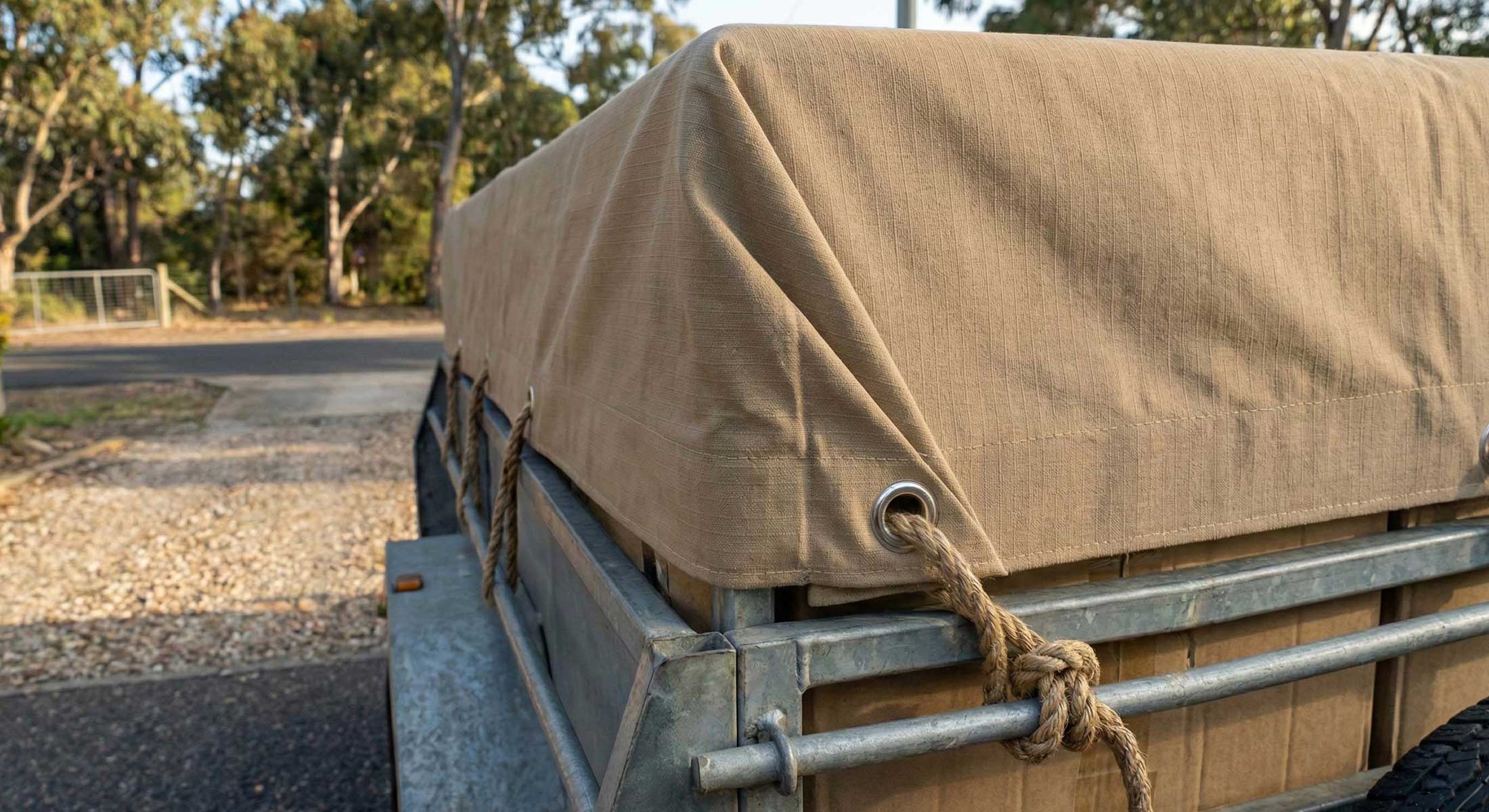
Look at how panels are joined. Double-stitched seams with UV-stable thread hold shape under tension and resist splitting. A flat, well-pressed seam is less likely to chafe on the tray edge or rope rail. Hems tell you how the edge will age. A folded hem with internal or perimeter webbing spreads the load from each eyelet along the edge, so you’re not relying on a single puncture point to do all the work. Corner patches add even more insurance where tie-down loads are highest. The difference between a tarp that lasts and one that frays early often lives in these small build details.
Eyelets and hardware
Eyelet material and spacing matter. Brass and stainless steel won’t rust stain your canvas and can handle years in the weather; plated steel is cheaper but can mark and seize. Wider spacing is fine for light covers in the yard. Closer spacing gives you more tie-down options and helps keep the edge straight and tight in the wind. If you know you’ll anchor to rope rails or use specific straps, think ahead about where you want eyelets. For fitted setups, extras like rope tracks, D-rings or custom pockets can make daily use faster and tidier.
Putting the spec sheet together
When you read a spec sheet, link each line to a real-world behaviour. GSM tells you how heavy and robust it will feel. The weave and blend tell you how it breathes and how it will age. Ripstop tells you how it behaves when nicked. Proofing tells you how it handles rain without turning into a sweatbox. Seams, hems and eyelets tell you if it will stay tight and put up with being tied down again and again. If the picture that forms is a heavy, quiet, proofed, double-stitched canvas with webbed hems and quality eyelets, you’re looking at a tarp built to work—and one you can repair and re-proof as the years go by.
Choosing with confidence
For home jobs, camping shelters and covering gear that shouldn’t be sealed in, a breathable canvas tarp is hard to beat. If you’ll tow at highway speeds or tie down in blustery weather, lean toward a higher GSM with ripstop, webbed hems and brass or stainless eyelets. If you’ll set up and pack down often, balance weight and handling so it’s easy to move without losing that lovely canvas feel.
At Discount Tarpaulins, our canvas range is made for Australian conditions, with sizes ready to ship and custom options if you need exact measurements, extra eyelets, rope tracks or shaped corners. Tell us how you’ll use it and we’ll translate that into the right spec, so you get a cover that’s quiet, tough and easy to live with.
