



Clear PVC vs Mesh/Shade and Solid PVC Tarps
Which Should You Choose?
If you’re covering a patio, closing in a pergola, screening a breezy side yard or making a weatherproof panel, the material you pick changes everything — how the space feels, how quiet it is, what you can see through it, and how easy it is to handle. This guide compares clear PVC, mesh/shade, and solid PVC using the criteria that matter at home: airflow, privacy, weight, weather protection, visibility and budget.
Start with how you want the space to feel
Airflow comes first. If your spot gets hot or gusty, mesh (shade cloth) takes the sting out of wind and glare without trapping heat. It’s the “breathe easy” option for summer entertaining, BBQ areas, decks and veggie patches. Solid PVC does the opposite — it blocks wind completely and holds warmth, ideal for winter nights or wet forecasts. Clear PVC sits in between on comfort: it blocks wind and rain like solid PVC, but because light pours through it feels more open. You’ll want to vent it slightly on warm days.
Visibility and privacy in the real world
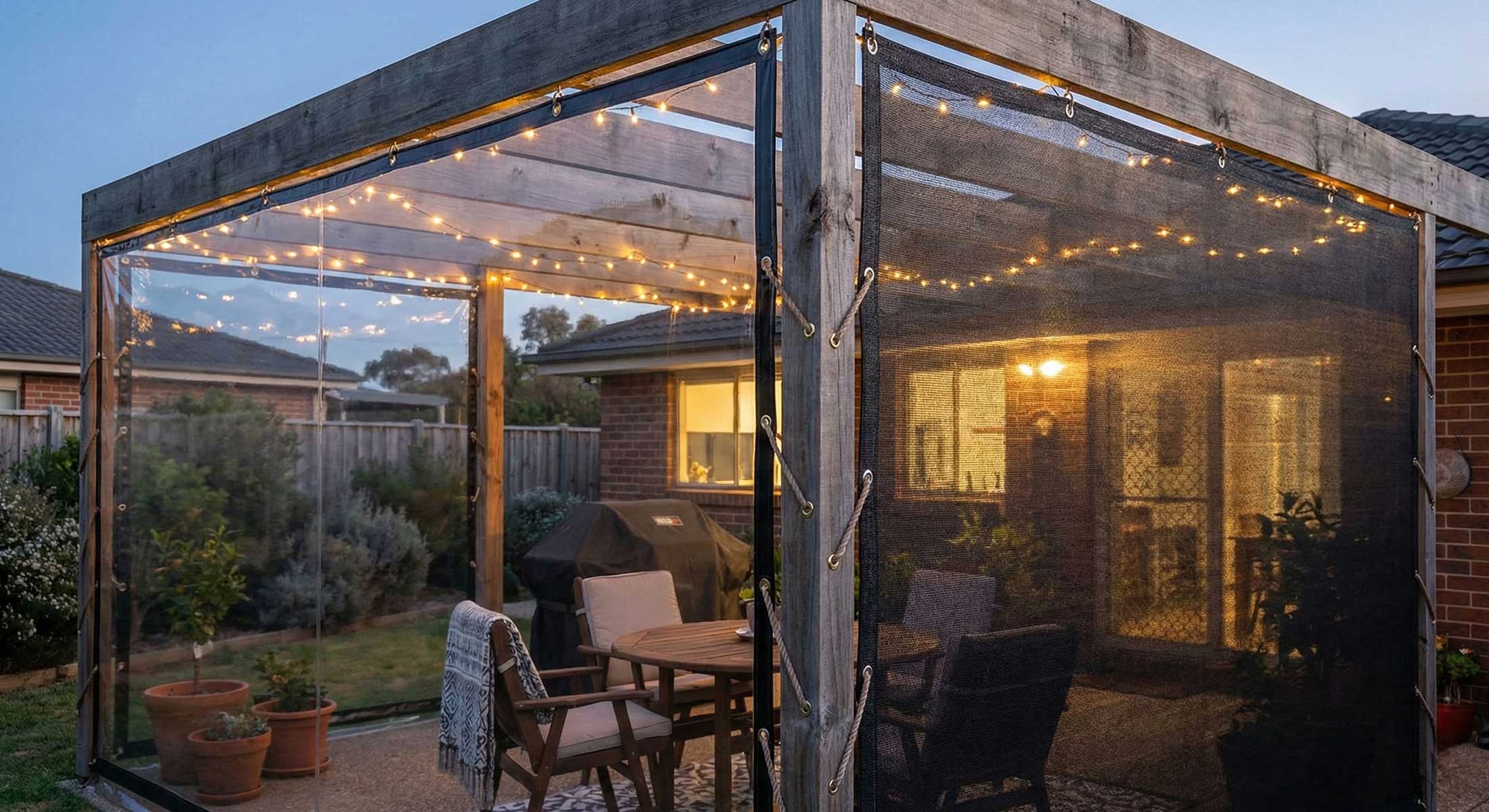
Clear PVC gives you a window-like view. It’s brilliant on patios and verandahs where you want to enjoy the outlook and natural light while staying out of the weather. Mesh offers softened sightlines — you can see shapes and movement, but it takes the edge off prying eyes, great for boundary screens and poolside windbreaks. Solid PVC is the most private. If you need a proper wall or want to hide storage, this is the option that looks finished and blocks the view both ways.
Weather protection and noise
For rain and cold wind, both clear and solid PVC form reliable barriers. With tidy tension and a slight roof fall, they’re quiet and won’t flap. Mesh doesn’t waterproof (by design), but it’s superb for cutting wind whistle and reducing flapping noise on breezy days. If noise control is a priority, mass helps: heavier PVC panels (clear or solid) tend to feel calmer once you’ve laced them down.
Weight, handling and storage
Mesh is the lightest to lift, clip and re-deploy. It’s the most forgiving for one-person setups and ad-hoc screens. Clear PVC is heavier than mesh and needs a bit more care: store it rolled, not sharply folded, and clean with a gentle soap to avoid clouding. Solid PVC is the heaviest and most rugged — great for semi-permanent panels, ute/trailer covers and long-term side walls, but you’ll notice the weight during install.
Budget and lifespan
Mesh usually starts lowest on cost, especially for larger spans. Clear and solid PVC sit higher due to material weight and finishes. In return you gain stronger weather protection and, with solid PVC, the longest service life in tough conditions. Think about total value: if you’ll use a cover all winter, the extra upfront spend on PVC can pay for itself in comfort and durability.
Where each shines at home
Choose clear PVC when you want a room-like finish without losing the view: patio edges, café-style verandah panels, workshop partitions where light matters. A great starting point is our Glass Clear PVC Tarp.
Pick mesh/shade when airflow is the priority: windbreaks along fences, poolside glare control, summer garden tunnels, privacy screens that still feel open. See our 250 GSM Heavy Duty Black 80% Mesh Tarp.
Go solid PVC when you need hard-wearing weatherproofing and privacy: long-term side walls, gear covers, trailer/ute covers and areas exposed to heavy rain. Our 680 GSM Super Heavy Duty Rip-Stop PVC Utility Tarp is built for this.
A simple way to decide
Picture the windiest day you actually use the space. If guests complain about chill and noise, lean toward PVC (clear where you want light, solid where you want privacy). If summer heat and stuffiness are the problem, start with mesh on the leeward side and add a single PVC panel on the windward side for balance. Many homes end up with a mix: mesh for everyday airflow, clear PVC panels you clip on when the weather turns, and a solid PVC cover for gear or the trailer year-round.
At Discount Tarpaulins we stock clear PVC, mesh/shade and heavy-duty solid PVC in practical sizes, and we can custom-make panels with extra eyelets or rope tracks to fit your exact spans. Tell us your measurements, usual wind direction and how you use the space — we’ll recommend the right combo.
