



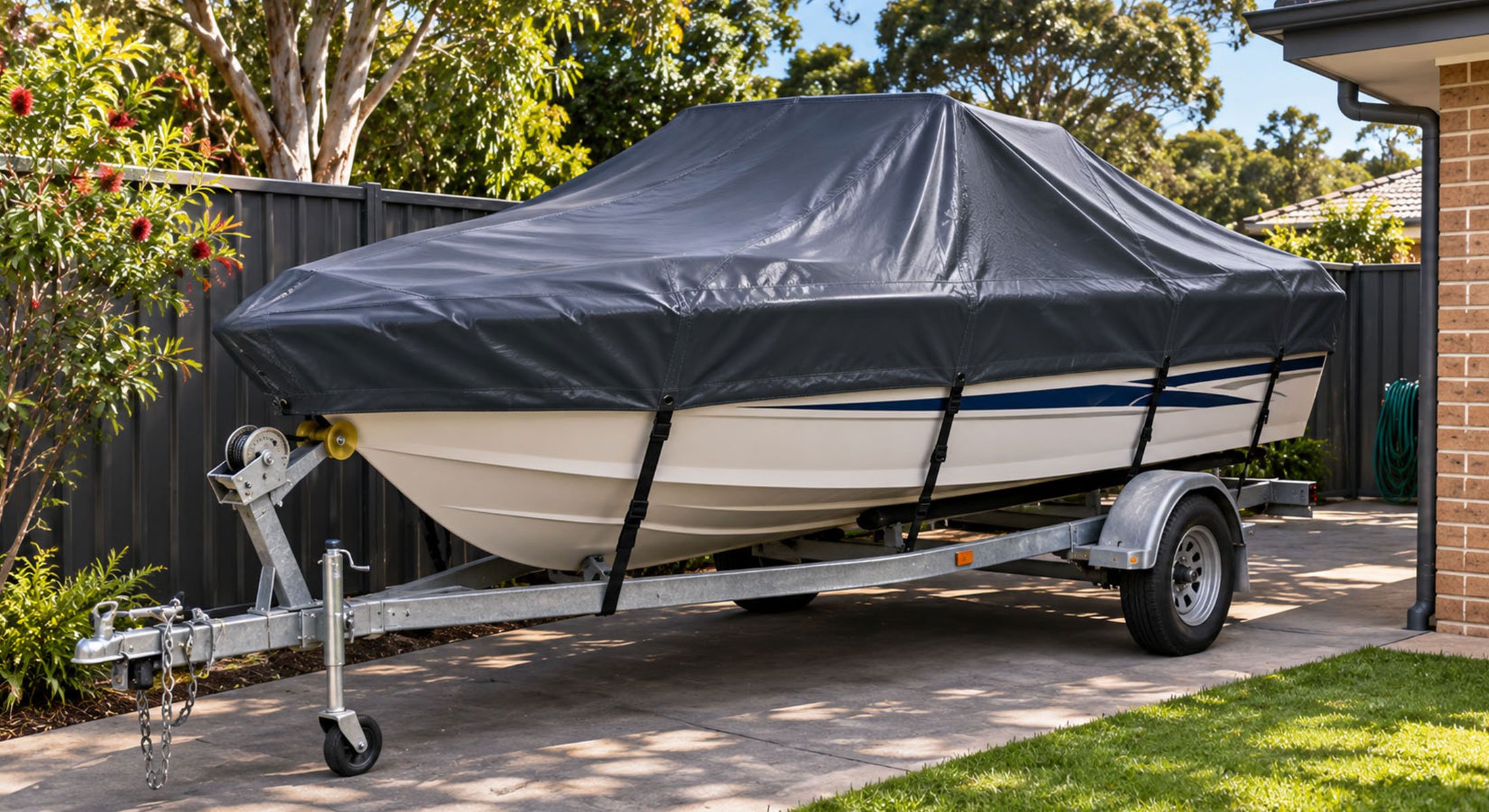
Keeping a Boat at Home: The Practical Challenges
Owning a boat opens up a world of possibilities, from early morning fishing trips to weekends exploring Australia’s waterways. But while most people spend plenty of time thinking about the boat they want to buy, where they’re going to keep it when they’re not using it can be a surprisingly important consideration.
For many Australian boat owners, keeping the boat at home is the most practical and affordable option. There’s no need to pay for a storage facility, the boat is readily accessible, and maintenance can be carried out whenever there’s some spare time.
However, storing a boat in the driveway, beside the house or in the backyard comes with its own challenges. Space, access, weather protection, security and ongoing maintenance all need to be considered, particularly when the boat spends most of its life outdoors.
With a little planning, it’s possible to create a home storage arrangement that keeps your boat protected, accessible and ready for the next trip.
Finding Enough Space for Your Boat
One of the first things to consider is how much room the boat and trailer actually need. It’s easy to underestimate the space required, particularly when looking at the dimensions of the boat itself rather than the entire towing setup.
A boat that measures five metres in length can occupy considerably more space once the trailer drawbar, outboard motor and other fittings are included. The width and height of the setup also need to be considered, especially if you’re planning to store it under a carport or alongside the house.
Before deciding on a storage location, measure the complete boat and trailer combination, including any fixed equipment that extends beyond the hull. Allow additional room for walking around the boat, fitting a protective cover and carrying out basic maintenance.
It’s also worth thinking about how the storage space affects the rest of the property. A boat permanently occupying the driveway might make parking other vehicles difficult, while storing it in a side yard could restrict access to the backyard.
An arrangement that works when the boat first arrives home may become frustrating if it interferes with everyday activities.
Getting the Boat In and Out
Having enough space to park a boat is one thing. Being able to manoeuvre it into position is another.
Narrow driveways, sloping blocks, tight corners and restricted access can make reversing a boat trailer surprisingly difficult. Even experienced drivers can find themselves making several attempts to position a trailer in an awkward storage area.
If you’re considering storing a boat beside or behind the house, check whether the trailer can safely negotiate the available space. Gates, fences, garden beds, retaining walls and overhanging trees can all create obstacles.
The condition of the ground is another factor. A firm, level surface is preferable to soft lawn or uneven soil, particularly when the boat is going to remain in the same position for extended periods.
For boats that are difficult to manoeuvre using a vehicle, a suitable trailer mover may be worth considering. These devices can help position trailers in confined spaces, although they must be correctly rated for the combined weight and appropriate for the ground conditions.
Ideally, getting the boat ready for a trip should be straightforward. If retrieving it involves moving several cars, dismantling a fence or negotiating a particularly difficult driveway, spontaneous trips to the water become considerably less appealing.
Protecting Your Boat from the Australian Weather
For boats stored outdoors, weather exposure is one of the biggest ongoing concerns.
Australia’s strong sunlight can take its toll on upholstery, plastics, rubber fittings and other exposed materials. Over time, prolonged UV exposure can contribute to fading, cracking and deterioration, particularly when a boat remains uncovered for months between trips.
Rain creates a different set of problems. Water collecting inside the boat can affect fittings, encourage mould and mildew, and create unnecessary maintenance work. Leaves, dust, bird droppings and other debris can also accumulate surprisingly quickly.
Keeping a boat under a garage or carport provides useful protection, but not every property has a suitable covered area. For boats stored in the open, a properly fitted protective cover is often one of the most practical solutions.
Depending on the application, marine-grade fabrics, canvas and suitable PVC materials can be used to create protective covers. The important considerations are weather resistance, UV performance, fit and how the cover is supported.
A poorly fitted cover can flap in the wind, rub against vulnerable surfaces or allow water to collect in low areas. A well-designed cover should direct rainwater away from the boat, remain securely attached and avoid placing unnecessary pressure on windscreens, rails or other fittings.
Ventilation is equally important. Trapping moisture beneath an airtight cover can create condensation and mould problems, so suitable ventilation provisions should be incorporated into the design.
At Discount Tarps, our range includes PVC materials, canvas, tarpaulins, rope and other accessories that can be useful when making protective covers or improving outdoor storage arrangements. For DIY projects, selecting materials that suit the application is particularly important.
Don’t Forget About Drainage
A boat stored outdoors needs somewhere for rainwater to go.
Even with a protective cover, it’s worth checking that drainage points are clear and that water cannot become trapped in compartments, storage lockers or the bilge.
For trailer boats, positioning the boat according to the manufacturer’s storage recommendations can help encourage water to drain towards the appropriate outlets. Where applicable, drain plugs should be managed according to the boat manufacturer’s instructions, and any removed plugs should be stored somewhere obvious so they’re not forgotten before the next launch.
The area surrounding the trailer also needs attention. Water pooling beneath the boat can create muddy conditions, encourage corrosion and make maintenance unpleasant.
A well-drained storage surface is particularly useful during extended periods of wet weather. Concrete or suitable compacted surfaces are generally easier to maintain than soft ground, provided they can support the weight of the boat and trailer.
Good drainage might not be the most exciting aspect of owning a boat, but it’s one of those details that can prevent considerable frustration later.
Keeping Up with Maintenance Between Trips
A boat doesn’t necessarily stay in good condition simply because it isn’t being used. In fact, some maintenance problems become more noticeable when equipment sits idle for long periods.
After a day on the water, particularly in saltwater environments, washing down the boat and flushing the engine according to the manufacturer’s instructions should be part of the usual routine.
Salt deposits can contribute to corrosion, while dirt and organic material left on surfaces can become more difficult to remove over time.
The trailer deserves just as much attention as the boat. Wheel bearings, brakes, tyres, suspension components, lights and electrical connections all need regular inspection. Boat trailers are exposed to demanding conditions, especially when frequently immersed during launching and retrieval.
Tyres can also deteriorate with age and sun exposure, even when they have plenty of tread remaining. Checking tyre condition and pressure before towing is particularly important if the trailer has been sitting unused.
Batteries should be maintained according to their type and the manufacturer’s recommendations, while fuel systems and engine components may require additional attention before and during extended storage.
Rather than waiting until the morning of a planned fishing trip, it’s worth setting aside time for periodic inspections. Discovering a flat battery, seized component or damaged trailer light while the boat is still in the driveway is much easier to deal with than finding the problem at the boat ramp.
Security Is Worth Thinking About
A boat stored at home can be an attractive target for thieves, particularly when the trailer is positioned in an easily accessible driveway.
Unlike many other valuable possessions, a boat on a trailer can potentially be taken away simply by connecting it to a suitable vehicle.
A quality trailer coupling lock is a sensible starting point. Depending on the storage location, additional security measures might include wheel clamps, heavy-duty chains, secure gates, motion-activated lighting or monitored security cameras.
Where practical, storing the boat behind a locked gate or away from direct street access can provide an additional obstacle.
It’s also worth removing valuable portable equipment when the boat isn’t being used. Fish finders, radios, fishing equipment and other accessories may be safer stored inside the house or a locked shed.
Insurance is another consideration. Before committing to a particular storage arrangement, check your policy for any conditions relating to where the boat is kept, security requirements and weather-related damage.
Be Mindful of Neighbours and Local Rules
Not every residential property is well suited to storing a boat, particularly in established suburbs where space is limited.
A large trailer can affect access, visibility and parking arrangements. Depending on the location, it might also create problems if the boat extends across a footpath, obstructs a driveway or interferes with neighbouring properties.
If you intend to store your boat on the street, local parking restrictions need to be checked. Rules vary between councils, and some areas have specific restrictions affecting trailers and other recreational vehicles.
There may also be planning or building considerations if you’re proposing to construct a new carport, permanent shelter or other structure to accommodate the boat.
A little research before making changes can help avoid problems later. It’s much easier to plan a suitable storage location from the beginning than to discover that the arrangement doesn’t comply with local requirements.
Making the Most of Limited Space
Not everyone has a large property with a dedicated boat shed, but there are ways to make smaller storage areas more practical.
For example, a properly designed carport may provide overhead weather protection without requiring a fully enclosed garage. Where suitable, removable screening can help reduce exposure to windblown debris and provide some additional shade.
Boat owners with enough clearance beside their home may be able to create a dedicated storage area using a firm surface and an appropriately designed shelter.
For those relying on an open driveway, a well-fitted cover, good drainage and secure trailer positioning can make a substantial difference without requiring major construction work.
Keeping equipment organised is another useful improvement. Rather than leaving spare ropes, cleaning products, fishing accessories and maintenance tools scattered around the boat, a nearby storage cabinet or shed can keep everything accessible.
The aim is to make storing, maintaining and preparing the boat as convenient as possible, while ensuring the arrangement is safe and suitable for the property.
Planning for Severe Weather
An everyday protective cover is useful, but it shouldn’t be mistaken for a complete storm protection strategy.
Strong winds can place significant loads on covers, fittings and temporary structures. During severe weather, a poorly secured cover can become damaged or create additional hazards.
If major storms or cyclones are forecast, follow local emergency advice and the recommendations of relevant marine authorities. Depending on the conditions, removing covers and other loose equipment, securing the trailer or relocating the boat to a safer location may be necessary.
For people living in storm-prone areas, it’s worth developing a plan well before severe weather arrives rather than trying to make arrangements at the last minute.
The best approach will depend on the type of boat, where it’s stored and the weather conditions likely to affect the property.
Keeping Your Boat Ready for the Next Adventure
Storing a boat at home can be an excellent option, particularly when it makes maintenance easier and allows you to head out on the water whenever the opportunity arises.
However, the convenience depends on having a practical arrangement that accommodates the boat, protects it from the elements and doesn’t make everyday life unnecessarily difficult.
From choosing a suitable parking location and improving drainage to investing in weather protection and maintaining the trailer, a few thoughtful decisions can make boat ownership much more enjoyable.
After all, the less time you spend dealing with storage problems, the more time you can spend doing what you bought the boat for in the first place.
