


Shock Cord vs Rope
Which One Should You Use?
Sometimes you want a tie-down to stay exactly where you put it. Other times, you want it to give a little when things move. That is the basic difference between conventional rope and elastic shock cord.
Both are useful around the home, garden, campsite, shed or trailer, but they are designed to behave very differently under tension. Choosing the right one can make a cover easier to secure, help manage movement and reduce unnecessary strain on attachment points. The trick is knowing when flexibility is useful, and when a more fixed tie-down is the better option.
What Is Shock Cord?
Shock cord, often called bungee cord, has an elastic core that allows it to stretch and then return towards its original length. That stretch is what makes it useful.
When a tarp, cover or other item moves slightly in the wind, shock cord can absorb some of that movement while continuing to apply tension. Instead of holding everything completely rigid, it gives the setup a little flexibility. For general home use, that can be handy anywhere you want a tie-down to stay reasonably snug while still being able to respond to movement.
It is commonly used with tarps, lightweight covers, camping setups and other temporary applications where some movement is expected. If the item shifts slightly, the shock cord can stretch and contract rather than immediately becoming loose.
Why Maintaining Tension Matters
Anyone who has tied down a tarp knows that getting it tight is only half the job. Wind, movement and changes in the shape of whatever you are covering can all affect the tension over time.
A rope that was tight when you tied it may become loose later if the tarp moves, the load settles or an attachment point shifts slightly. Shock cord behaves differently because it is constantly trying to contract. That means it can continue pulling against the attachment point even when there is some movement in the setup.
This can help keep a cover reasonably taut without creating an entirely rigid connection. For temporary outdoor covers, that little bit of give can make a noticeable difference.
Where Shock Cord Makes Sense
One of the most common uses for shock cord is securing tarps and lightweight covers. Imagine a cover over outdoor furniture, camping equipment or something stored beside the shed. If wind catches the cover, an elastic tie-down can allow a small amount of movement while still pulling the cover back into position.
Shock cord is also useful around campsites, where tarps, awnings and temporary covers may move as wind conditions change. Because the cord stretches, it can be easier to tension around awkward shapes than a completely fixed length of rope.
Another advantage is convenience. If you regularly remove and replace a cover, a shock cord setup can be quicker to use than repeatedly tying and untying knots. Once it has been set up correctly, it can simply be stretched into place again.
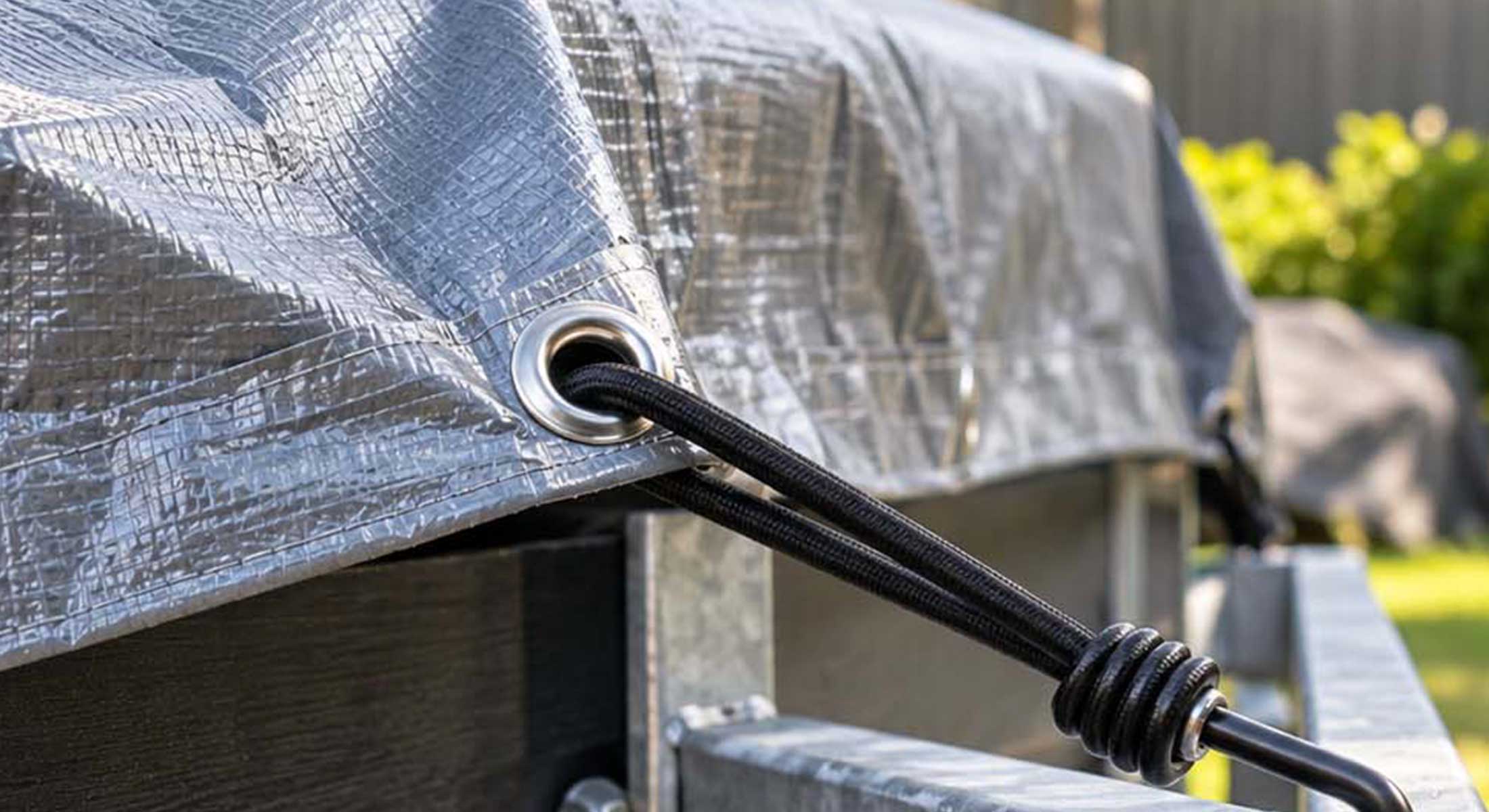
Elasticity can also be useful around tarp eyelets. With a completely rigid tie-down, movement can be transferred directly into the tarp and its attachment point. Shock cord can absorb some of that movement instead. That does not make every setup indestructible, but in the right application it can provide a more forgiving connection.
Where Rope Is the Better Choice
There are plenty of jobs where stretch is exactly what you do not want. That is where conventional rope comes in.
Rope is generally the better choice when you need a more fixed connection and want the tie-down to stay at a particular length once it has been tensioned. Around the home, that might include tying something to a fixed point, securing equipment in the shed, creating a support line or fastening something where movement needs to be kept to a minimum.
Rope also gives you much more control over knots and attachment methods. You can shorten it, lengthen it, wrap it around different objects and choose a knot to suit the job. For someone who likes to keep versatile gear in the garage, ute or camping box, a decent length of rope is difficult to beat.
Discount Tarps carries a range of rope and cord options, including nylon rope, polypropylene rope, polyester yacht rope, tarpaulin rope lengths and elastic shock cord, so there are different choices depending on the job.
Think About Movement Before Choosing
A simple way to choose between shock cord and rope is to think about movement. If you want the tie-down to flex a little, shock cord is worth considering. If you want the connection to remain much more fixed, rope will usually make more sense.
For example, a temporary tarp that moves slightly in the breeze may benefit from elastic tension. A line tied between two fixed points probably does not. It sounds obvious when you put it that way, but it is easy to overlook when you are standing in the garage grabbing whatever happens to be closest.
The right choice is less about which product is “better” and more about what you need the tie-down to do.
Shock Cord Can Help With Irregular Shapes
Not everything we cover is conveniently square. Outdoor furniture, camping gear, stacked equipment and odd-shaped items can all make tie-downs a little awkward.
Because shock cord stretches, it can often adapt more easily to these irregular shapes. You can maintain tension across different parts of a cover without every attachment point needing to be positioned perfectly. That makes it particularly useful for temporary covers and lighter-duty setups around the home.
Rope can certainly be used for the same jobs, but getting even tension may require a little more adjustment. Where flexibility helps, shock cord can make the setup quicker and easier.
Rope Gives You More Control
Where shock cord wins on flexibility, rope wins on control. Once properly tied, rope can hold a set length without constantly changing tension, which makes it useful when you need something to stay exactly where you put it.
It is also easier to create custom tie-down arrangements with rope. You can run one long length between several points, make loops, use different knots or secure items independently. For many everyday household jobs, that versatility is exactly what you need.
Different rope constructions also behave differently, so it is worth choosing a rope that suits the application rather than assuming all rope is the same.
What About Tying Down Tarps?
This is where the choice becomes particularly useful in practice. For many temporary tarp setups, elastic shock cord can be a practical option because it helps maintain tension while allowing the tarp to move slightly.
That can be especially useful where wind is likely to move the cover. Rather than holding the tarp completely rigid, the shock cord allows some controlled movement while continuing to pull the tarp back into position.
For a more fixed setup, rope may make more sense, particularly where you want to position the tarp precisely and hold it at a set distance from the attachment point. The tarp itself, the attachment points, the weather, how long the setup will remain in place and how much movement you expect all matter.
In some situations, both may be useful. Rope might form the main support or fixed anchor, while shock cord is used at selected attachment points where a little movement is desirable.
Don’t Confuse Flexibility With Strength
Shock cord and rope should not be treated as interchangeable simply because they can both be used to tie things down. Elasticity is not the same thing as strength.
Shock cord is useful because it stretches and maintains tension. Rope is useful because it provides a more fixed connection. Neither should automatically be chosen simply because the item being secured is heavy.
For demanding loads or vehicle load restraint, you need equipment specifically suited to that task and the load involved rather than relying on general-purpose cordage. For everyday home use, though, understanding the difference between flexible tension and fixed tension will get you most of the way towards choosing the right option.
A Simple Rule of Thumb
If you want a tie-down that can flex, absorb some movement and keep pulling against the item being secured, use shock cord. If you want a tie-down that stays at a more fixed length and gives you greater control over the connection, use rope.
That is the simplest way to think about it. One is designed to move with the job, while the other is better when you want things to stay put.
If you are covering something outdoors, it is also worth thinking about what will happen when the wind picks up. That is usually when the difference between the two becomes most noticeable.
Choosing the Right Cord for the Job
There is no need to make a simple tie-down job more complicated than it needs to be. Shock cord and rope are both extremely useful; they just solve slightly different problems.
Shock cord is at its best when movement and changing tension are part of the job. Rope is better when you want a more stable, fixed connection. Keeping a little of both around the shed, garage or camping gear means you are more likely to have the right option when you need it.
Because as anyone who owns a tarp eventually discovers, there is always something else that needs tying down.
