



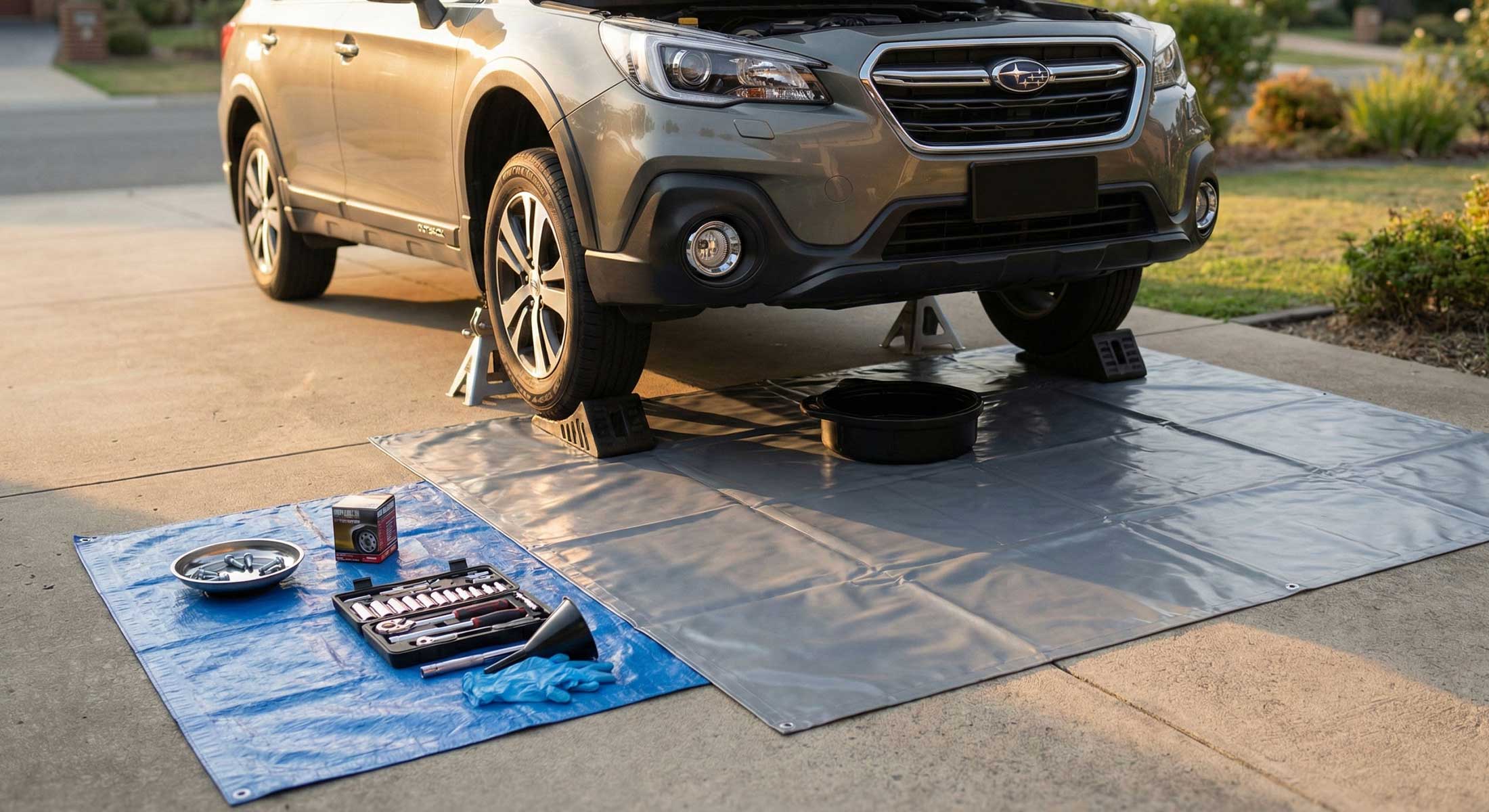
Driveway Oil-Spill Prevention When Wrenching at Home
PVC as your drip barrier, poly for staging parts — tidy driveway, tidy job.
A quick oil change shouldn’t leave your driveway stained for months. With the right setup, you can protect the surface, keep parts organised, and make clean-up easy. A handy trick is using PVC and poly tarps for what they’re best at: PVC as a tough, impermeable drip barrier under the vehicle, and poly as a lightweight staging sheet for tools and parts beside it.
Why spills happen — and why they stick
Oil loves to creep. A missed drip, a gust of wind, or a knocked drain pan and suddenly you’ve got splatter in concrete pores or along pavers. Once it wicks in, it’s annoying to remove and can leave a permanent shadow. A simple barrier stops most of that drama and buys you time to work calmly.
PVC tarp = the drip barrier under the car
PVC is waterproof and oil-resistant, which makes it ideal under sumps, filters and gearboxes. Lay a PVC tarp that’s wider and longer than the vehicle by a good margin so splashes are caught even if the drain pan is bumped. Add a gentle crown by placing your drain pan on a rubber mat so the surrounding PVC slopes slightly towards it rather than letting drips wander. Weight or tape the edges so the sheet can’t lift in a breeze, and keep the surface clear of sharp gravel that could puncture it. When you’re finished, fold the tarp in on itself so any residue stays contained, then wipe it clean for next time.
Poly tarp = the staging area for parts and tools
Poly is light, easy to move and perfect for creating a clean parts mat next to the work zone. Spread a poly sheet on the driveway or lawn for tools, fasteners, filter boxes and new parts. It keeps grit away from seals and bearings and makes it obvious if you’ve dropped a washer. If you’re swapping messy components, position the poly staging a step away from the PVC drip zone so oily items don’t get walked through your workspace.
A quick setup that works
Start by sweeping the driveway so nothing sharp sits under your tarps. Roll out the PVC sheet under the engine bay, weight the corners and place your drain pan centrally. Lay your poly staging sheet where you can reach it without twisting or stepping over the pan. If you expect a bit of wind, run a light rope through the PVC eyelets and tie to something solid so nothing shifts while you’re underneath. Work at a steady pace, keep lids on fluids, and you’ll stay ahead of stray drips.
Clean-up and disposal that’s driveway-safe
When the job’s done, cap containers, wipe down the PVC with a rag and a small amount of appropriate cleaner, and fold it inward so any residue is captured. Shake off the poly sheet, let it dry and store it flat or rolled. Used oil and oily rags must never go down drains; take them to your local transfer station or recycling point that accepts automotive oil and contaminated materials. If there’s a splash on the surface, deal with it promptly so it doesn’t soak in — absorbent granules or even clean sand can help lift fresh spots before you wash down the area.
Sizing, placement and what to choose
For most driveways, a medium-thickness PVC tarp a little larger than the footprint of the car’s front half gives plenty of protection without being awkward to handle. Choose a poly sheet big enough for a tool line, a parts tray and a clean area to lay fasteners out in order. If you service more than one vehicle, go a size up for the PVC and mark a centreline with tape so you can position the sump quickly. Store both sheets clean and dry and you’ll be set for the next service.
At Discount Tarpaulins we carry PVC tarps that act as dependable drip barriers and poly tarps that make great lightweight staging mats — plus eyelets, tie-downs and sizes that suit typical home garages and driveways. Tell us your driveway layout and what you’re working on and we’ll kit you out with the right combo.
